







Bar Association Link Opportunities for Personal Injury Firms

LAW FIRM SEO THAT WORKS®
Our Focus: Your Firm
The best law firm marketing comes with a No Competition™ Guarantee.
Bar association links are among the most trusted backlinks a personal injury law firm can earn. State bar websites, local county bar associations, and specialty legal organizations all carry institutional authority that commercial directories simply cannot match. When your firm’s website appears in these member directories, you get a citation from a source that Google, Bing, and AI platforms like ChatGPT and Perplexity treat as highly credible. For firms investing in law firm marketing, bar association links represent one of the highest-return, lowest-risk opportunities in the entire link-building toolkit.
Table of Contents
- Why Bar Association Links Carry More Weight Than Standard Directory Links
- The Full Spectrum of Bar Association Link Sources Available to Attorneys
- How to Maximize Every Bar Association Profile for SEO and AI Visibility
- Going Beyond Membership Listings: Active Participation That Earns More Links
- Building a Bar Association Link Audit and Outreach System
- FAQs About Bar Association Link Opportunities
Why Bar Association Links Carry More Weight Than Standard Directory Links
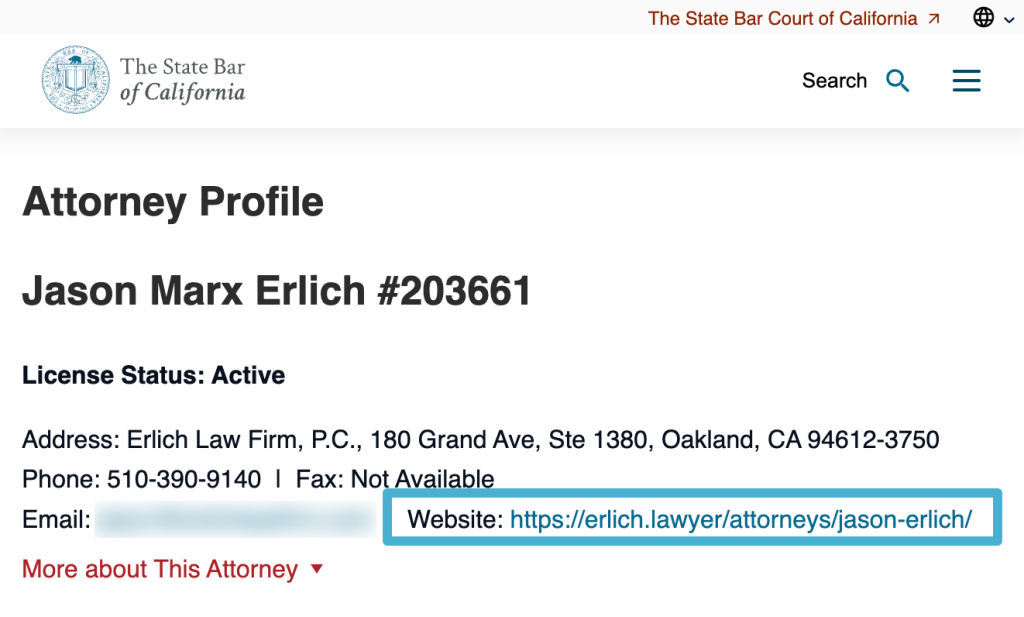
A link from your state bar’s member directory is fundamentally different from a link on a general legal directory. State bars are either government-sanctioned regulatory bodies or official professional organizations. Their websites sit on established domains with decades of institutional history. Search engines recognize that difference.
In most states, the state bar association manages the licensing or regulatory agency, and in 44 states plus the District of Columbia, that licensing body publishes its attorney database online so the public can verify whether an attorney is licensed, active, and in good standing. That public-facing database is the foundation of a bar association link. Your profile in it connects you to a domain that potential clients and search engines both trust.
AI platforms take this a step further. Systems like ChatGPT, Perplexity, and Claude crawl and index authoritative sources when building their knowledge about legal professionals and firms. A bar association profile establishes your firm as a verified legal entity. That entity recognition matters for Answer Engine Optimization, where AI systems decide which attorneys to mention when answering a user’s question about finding a personal injury lawyer in a specific city.
The link policies across bar sites vary. As noted in Custom Legal Marketing’s directory research, local bar and state bar sites vary in whether they pass dofollow or nofollow links, with many providing dofollow links depending on the specific association. The SEO value of a dofollow link is measurable. The trust signal from any bar association link, regardless of follow status, carries weight for both traditional rankings and AI citation patterns.
Personal injury firms in particular benefit here. Injury law is local. Clients search by city and county. Local bar associations, county bar associations, and city-level legal organizations all operate websites that carry strong geographic signals. A link from the Houston Bar Association or the Allegheny County Bar Association tells search engines exactly where your firm operates.
The Full Spectrum of Bar Association Link Sources Available to Attorneys
Most attorneys think of bar association links as a single item on a checklist. The actual opportunity is far broader. There are four distinct tiers of bar organizations, each with its own website and its own link profile potential.
The first tier is your mandatory state bar. All attorneys licensed by the Texas Bar, for example, are required to submit their contact information to the State Bar of Texas. Similar requirements exist across the country. Your mandatory bar listing is the baseline, and it should include a complete profile with your website URL.
The second tier is voluntary state bar associations. Some states have a voluntary bar association focused on advancing and improving the legal profession, some have a government-sanctioned body charged with regulation and licensing, and in some states one organization serves both functions. Voluntary bars often allow more robust member profiles, including website links, practice area descriptions, and biographical content.
The third tier is county and city bar associations. In addition to supporting and helping connect attorneys locally, some bar associations also coordinate free legal services or legal clinics for the public. These local associations maintain their own websites, member directories, and often referral services. Their domain authority may be lower than a state bar, but their geographic relevance is higher. For a personal injury firm targeting a specific metro area, a link from the county bar association can outperform a generic national directory listing in local search results.
The fourth tier is specialty and affinity bar associations. Organizations like the American Immigration Lawyers Association, the National Bar Association, state trial lawyers associations, and practice-area-specific groups all maintain member directories. The American Bar Association itself offers membership across sections, divisions, and forums that provide access to practice-enhancing resources, with over 35 member groups to choose from. Each section maintains its own web presence and member listings. Joining the ABA’s Tort Trial and Insurance Practice Section, for example, places your firm’s name and website on americanbar.org, one of the most authoritative legal domains on the internet.
How to Maximize Every Bar Association Profile for SEO and AI Visibility
Claiming a bar association listing is the starting point. Optimizing it is where the real law firm SEO value comes from. A bare-minimum profile with just your name and phone number does far less work than a fully built-out profile with consistent NAP data, practice area descriptions, and a live link to your firm’s website.
Consistency matters above almost everything else. Your firm name, address, and phone number must match exactly across every bar association profile, your Google Business Profile, and your own website. Discrepancies in how your firm name appears, even small differences like “LLC” versus “L.L.C.,” create conflicting signals that can reduce the trust value of each individual citation.
The American Bar Association’s website confirms that directories of board-certified lawyers can be found on the websites of each national certifying organization, and states that certify lawyers also have listings of board-certified lawyers on their websites. If your attorneys hold any board certifications, those specialty certification directories represent additional link opportunities beyond standard membership profiles. Each certifying organization maintains its own directory, and each directory is a separate citation from a separate authoritative domain.
Practice area descriptions within your profiles serve a dual purpose. They tell search engines what your firm does, and they tell AI platforms what topics your firm is relevant for. A personal injury attorney who fills out the practice area fields with specific language, “motor vehicle accidents,” “premises liability,” “wrongful death,” creates a richer semantic signal than one who simply lists “personal injury.” AI systems parsing these profiles use that specificity when deciding whether your firm is relevant to a user’s query.
Where bar associations allow it, include a link to your most relevant practice area page rather than just your homepage. A link pointing to your car accident attorney page carries more topical relevance than a generic homepage link, and it passes authority directly to the page you most want to rank.
Going Beyond Membership Listings: Active Participation That Earns More Links
A profile in a member directory is passive. Active participation inside bar associations generates links that passive listings never will. The ABA’s Business Law Section alone notes that members can increase their exposure and build their resume by participating on a CLE panel or authoring an article. That same opportunity exists across every section, division, and local bar association in the country.
When a personal injury attorney speaks at a bar association CLE event, the event page on the association’s website typically lists the speakers with links to their firm websites. That is an editorial link from an institutional domain. It carries more weight than a directory listing because it comes from editorial content on the site, not a member database.
Writing for a bar association publication creates a similar opportunity. Joining specialty committees provides access to valuable resources including newsletters, webinars, substantive teleconferences, and interactive discussion lists, along with opportunities to boost your professional profile through publishing, speaking, and other credential-building activities. Every article byline in a bar journal or newsletter that includes a link to your firm’s website is a citation from a trusted source. AI platforms that crawl legal content for authoritative voices use exactly this kind of publication as a reference point.
Leadership positions within bar associations generate sustained link exposure. A committee chair, section officer, or board member gets named on the association’s leadership pages, often with a firm website link. Those pages tend to be more stable than event pages and remain indexed for years.
Local bar associations frequently maintain resource pages listing attorneys who offer pro bono services, lawyer referral services, or community legal clinics. Some bar associations coordinate free legal services or legal clinics for the public. Participating in those programs earns placement on resource pages that carry strong local authority signals. The link value is real, and the reputational benefit of appearing as a community resource reinforces the E-E-A-T signals that Google uses to evaluate personal injury content.
The ABA’s online presence extends this further. Founded in 1878, the ABA is committed to advancing the rule of law across the United States and beyond by providing practical resources for legal professionals, law school accreditation, model ethics codes and more. A mention or link on americanbar.org, earned through active participation rather than passive membership, carries authority that few other legal sources can match.
Building a Bar Association Link Audit and Outreach System
Most personal injury firms are sitting on unclaimed bar association link opportunities right now. The audit process is straightforward: identify every bar association your attorneys are eligible to join, check whether each has a public member directory, and verify whether your firm’s current profile is complete, accurate, and includes a live website link.
Start with the mandatory state bar. Each state bar database provides different types of information, including the attorney’s name, address, phone number, email address, education, area of practice or specialty, and years in practice. Every field that accepts your website URL should be filled in. Every practice area field should reflect your actual work. Incomplete profiles waste the authority the domain already has.
The American Bar Association maintains a resource page listing bar-sponsored lawyer-finding services by state. State-specific resources include services like the Kansas Bar Association Member Search, the Kentucky Bar Association Lawyer Locator, the State Bar of Michigan Attorney Search, the Minnesota Bar Find a Lawyer Service, the Missouri Bar Find a Lawyer, the Nebraska Directory of State Bar Members, the Nevada State Bar Directory, and the New Hampshire Bar Association Directory. That list gives you a starting point for identifying which associations in your state have public-facing directories worth claiming.
After the mandatory bar, map out every county and city bar association in your target market. A firm in Dallas, for example, has access to the State Bar of Texas, the Dallas Bar Association, and numerous county-level associations across the DFW metro. Each one is a separate citation opportunity with distinct geographic signals.
Outreach to bar associations for active participation, such as CLE speaking slots or committee membership, requires a different approach than simply claiming a directory profile. The pitch is professional, not promotional. Offer a specific topic you can speak on, a case study that would benefit other attorneys, or a resource you can contribute to a committee. Associations are looking for members who contribute. Attorneys who contribute get featured.
Custom Legal Marketing builds these link strategies as part of a comprehensive approach to local link building for personal injury firms. If you want a full audit of your current bar association link profile and a prioritized outreach plan, contact our team for a free consultation.
FAQs About Bar Association Link Opportunities
Do bar association links actually help with Google rankings?
Yes. Links from state bar websites, local bar associations, and specialty legal organizations pass authority to your firm’s website. Many state bar domains carry significant institutional authority because they have been established for decades and are referenced by courts, government agencies, and legal publications. The geographic relevance of county and city bar links also strengthens local search rankings, which matter most for personal injury firms targeting clients in specific metro areas.
What is the difference between a dofollow and nofollow bar association link?
A dofollow link passes PageRank, which is Google’s measure of a page’s authority, directly to your firm’s website. A nofollow link tells search engines not to pass PageRank, but it still provides a citation that AI platforms and search engines use when building their understanding of your firm as a trusted entity. Bar association links, even nofollow ones, contribute to your firm’s overall authority profile because of the institutional credibility of the source domain.
How many bar associations should a personal injury firm join?
Every attorney should be listed in their mandatory state bar directory at minimum. Beyond that, the right number depends on your target market. A firm practicing across a major metro area should claim profiles in the county and city bar associations covering that market, join at least one specialty organization relevant to injury law, and consider ABA section membership for national authority signals. There is no fixed ceiling. Each additional legitimate bar association membership is an additional citation from a credible source.
Can bar association participation help with AI search visibility?
Yes. AI platforms like ChatGPT, Perplexity, and Claude use authoritative sources to build their knowledge about attorneys and law firms. Bar association websites, ABA publications, and specialty legal organization directories are exactly the type of sources these systems treat as credible references. When your firm appears in multiple bar association contexts, those platforms are more likely to recognize your firm as a verified, established entity and include you in responses to queries about personal injury attorneys in your area.
What is the fastest way to start building bar association links?
Audit your existing mandatory state bar profile first. Make sure it is complete, accurate, and includes your firm’s website URL. Then identify the county and city bar associations in your primary market and claim or update those profiles. That baseline work can typically be completed in a few hours and captures the most geographically relevant citations immediately. Active participation opportunities, such as CLE speaking and committee membership, take longer to develop but generate the highest-value editorial links over time.
More Resources About Link Building for Personal Injury Firms
- Link Building Strategy for Personal Injury Firms
- Press Releases for Personal Injury Law Firms
- Reactive PR for News Cycles and Personal Injury
- Original Research for Personal Injury SEO
- Surveys and Studies for Law Firms
- Local Sponsorship Strategy
- Community Involvement and Earned Links
- Law School Alumni Link Sources
- Podcast Guesting for Attorneys
What Our Clients Are Saying
