








AEO vs SEO for Personal Injury Firms

LAW FIRM SEO THAT WORKS®
Our Focus: Your Firm
The best law firm marketing comes with a No Competition™ Guarantee.
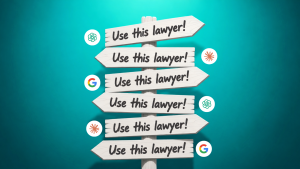
Personal injury is one of the most competitive practice areas in American law, and the competition for new clients now plays out on two separate fronts. Traditional law firm SEO still drives cases through Google’s organic results and local pack. Answer Engine Optimization captures the growing share of potential clients who ask ChatGPT, Perplexity, or Google’s AI Overviews for help before they ever visit a website. Understanding where these two disciplines overlap, where they diverge, and how each one serves a personal injury firm’s growth goals is no longer optional. It determines which firms get called and which ones get skipped.
Table of Contents
- Why Personal Injury Queries Trigger AI Answers at the Highest Rate of Any Practice Area
- How SEO and AEO Actually Work Differently for Personal Injury Firms
- Where the Two Strategies Overlap and Where They Diverge for Personal Injury
- What Personal Injury Firms Lose by Running Only One Strategy
- The Content Architecture That Serves Both SEO and AEO for Personal Injury
- FAQs About AEO vs SEO for Personal Injury Firms
Why Personal Injury Queries Trigger AI Answers at the Highest Rate of Any Practice Area
The legal niche triggers the highest percentage of AI Overviews at 77.67%, ahead of health at 65.33%, finance at 41.67%, and politics at 16.67%. That figure, drawn from SE Ranking’s YMYL research, has direct consequences for personal injury firms. Nearly every informational query a prospective client types, from “how long do I have to file a car accident claim in Texas” to “what is pain and suffering worth in a slip and fall,” now produces an AI-generated answer above the organic results.
78% of legal queries now trigger a Google AI Overview, the highest rate of any industry, per Semrush analysis of more than 10 million keywords. When a potential client asks about statute of limitations periods, liability in truck accidents, or what a personal injury attorney actually does, an AI system answers first. The firm whose content gets cited in that answer earns the lead. Everyone else waits below the fold.
When an AI Overview appears, only 8% of users click a traditional result, versus 15% without, a 47% reduction in click-through. For personal injury firms that have spent years building page-one rankings, that number reframes the entire value of those rankings. A position-one ranking for “car accident lawyer near me” still matters, but the click-through rate attached to it has been cut nearly in half on queries where an AI Overview fires first.
The scale of the personal injury market makes this visibility gap especially costly. According to the IBISWorld Report, the personal injury law sector remains a robust segment within the legal industry, with U.S. industry revenue reaching $61.7 billion in 2025. In a market that size, the firms capturing AI citations alongside traditional rankings hold a compounding advantage over those optimizing for blue links alone.
How SEO and AEO Actually Work Differently for Personal Injury Firms
Traditional SEO ranks pages. AEO ranks answers. The distinction sounds simple, but the operational difference is significant for a personal injury firm building a content strategy.
SEO for personal injury firms centers on keyword targeting, technical site health, backlink acquisition, and on-page signals that tell Google a page deserves a high position in the ranked list. A well-executed personal injury SEO campaign produces practice area pages that rank for terms like “car accident lawyer Chicago” or “slip and fall attorney Houston,” drives local pack visibility through Google Business Profile optimization, and builds domain authority through citation consistency and earned links. The output is a ranked position that users see when they scroll past any AI-generated content at the top of the page.
AEO operates at the passage level. Google’s AI Overview system, ChatGPT, Perplexity, and similar platforms do not rank pages in a list. They extract specific passages from content, evaluate whether those passages directly answer the question being asked, and synthesize a response. A personal injury firm’s page on truck accident liability might rank seventh in traditional search, but if the first paragraph under the heading “Who is liable in a commercial truck accident?” directly answers that question in 40 to 60 words with specific statutory or factual detail, that passage gets extracted and cited.
A large-scale Ahrefs study of 863,000 keywords and 4 million AI Overview URLs found that only 38% of pages cited in Google AI Overviews also rank in the top 10 for the same query, down sharply from 76% just seven months earlier. Only about 17% of sources cited in AI Overviews also rank in the organic top 10, and roughly 5 out of 6 AI Overview citations pull from content that does not appear on page one of traditional results. This decoupling means a personal injury firm with strong AEO-optimized content can earn AI citations without necessarily holding a top-ten ranking, and a firm holding a top-ten ranking has no guarantee of AI citation.
The structural requirements differ too. SEO rewards comprehensive coverage of a topic, internal linking across related pages (connecting practice area pages, city pages, and blog content into a coherent site architecture), and E-E-A-T signals demonstrated through attorney bios, case results, and verifiable credentials. AEO adds a layer of answer-first formatting, question-format headings, schema markup including LegalService and Attorney schema, and topical cluster depth that covers every sub-question a potential client might ask about a personal injury matter. Both disciplines share the same technical foundation, but AEO demands a more granular approach to content structure at the individual heading level.
Where the Two Strategies Overlap and Where They Diverge for Personal Injury
The overlap between SEO and AEO is real, and personal injury firms should not treat them as entirely separate programs. Strong technical performance, mobile responsiveness, a clean URL structure, and a credible backlink profile all support both disciplines. A firm that ranks well tends to have the domain authority and crawlability that AI systems need to trust and extract its content. BrightEdge research shows that YMYL topics have strong overlap between organic rankings and AI Overview citations, and since legal content is YMYL, firms with strong SEO already have an advantage when optimizing for AI.
The divergence shows up in content strategy. SEO for personal injury firms prioritizes keyword volume and commercial intent. A keyword research process for a personal injury firm identifies high-volume terms like “personal injury lawyer” and “car accident attorney,” maps them to practice area pages, and builds supporting content around related terms. AEO prioritizes question coverage and answer precision. The same firm needs pages that answer “what is the statute of limitations for a personal injury claim in my state,” “how much does a personal injury attorney cost,” and “what happens if I was partially at fault in a car accident” with direct, structured responses that AI systems can extract at the passage level.
Local SEO and local AEO also diverge in important ways. 1 in 5 consumers would use ChatGPT to research which lawyer to hire. When a prospective client asks ChatGPT “who are the best personal injury lawyers in Atlanta,” the AI system draws on entity signals across the open web: bar association profiles, directory listings, Google Business Profile data, press mentions, and review signals. Local SEO focuses on the Google local pack and Maps. Local AEO requires that same firm to have consistent entity recognition across every platform an AI system crawls, including platforms that have no direct SEO value in the traditional sense.
Schema markup is another point of divergence. Traditional SEO benefits from schema but does not require it for most ranking gains. AEO depends on it. LegalService schema, Attorney schema, FAQ schema, and structured data marking a firm’s phone number, address, and service areas as machine-readable fields all contribute to how confidently an AI system can extract and attribute content to a specific firm. A personal injury firm without proper schema implementation is harder for AI systems to identify as an authoritative source, regardless of its traditional ranking position.
What Personal Injury Firms Lose by Running Only One Strategy
A personal injury firm that invests exclusively in traditional SEO is optimizing for a shrinking share of the client discovery journey. AI Overviews now appear in 60% of Google searches as of February 2026, fundamentally altering how potential clients discover legal services. A firm ranked first for “personal injury attorney Dallas” still collects clicks, but the pool of users who ever reach that ranking is smaller than it was two years ago. The informational queries that once fed the top of a firm’s funnel, the “do I have a case” and “how does a personal injury lawsuit work” searches, now resolve inside AI-generated answers that may cite a competitor or a legal information site instead.
A firm that invests exclusively in AEO without maintaining strong traditional SEO faces a different problem. AI Overview citations are not stable. Ahrefs research found AI Overviews change every two days on average. A firm cited in a Google AI Overview for “truck accident lawyer” this week may not be cited next week. Traditional organic rankings provide a more durable traffic floor. The local pack still drives calls for “near me” queries, and Google’s own data confirms that local provider queries route to Maps rather than AI Overviews. A firm without strong local SEO misses those calls entirely, regardless of how well its content performs in AI systems.
The compounding effect of running both strategies simultaneously is where the real growth happens. Citations in AI-generated summaries deliver higher-quality engagement than traditional rankings, producing 35% more organic clicks and 91% more paid clicks for firms mentioned in overviews. A firm that earns an AI citation and holds a traditional ranking for the same query captures both the user who reads the AI answer and clicks through, and the user who scrolls past it to the organic results. That dual presence on a single query produces more contacts per search impression than either channel alone.
The personal injury market rewards this kind of compounding. Plaintiffs who hired a lawyer received an average of $77,600 in compensation, compared to an average of $17,600 for those who represented themselves. Every additional case a firm captures through improved AI and organic visibility carries significant lifetime value. The cost of running a combined SEO and AEO program is fixed. The upside scales with every case that converts from a client who found the firm through either channel. Custom Legal Marketing’s law firm marketing programs are built around this integrated model, treating traditional rankings and AI citations as two outputs of the same disciplined content and authority-building process.
The Content Architecture That Serves Both SEO and AEO for Personal Injury
Personal injury firms do not need two separate content programs to compete in both traditional search and AI-generated answers. The same content architecture serves both disciplines when it is built correctly from the start.
Practice area pages form the core. A page on car accident claims, for example, needs to rank for commercial terms like “car accident lawyer [city]” and simultaneously answer every informational sub-question a prospective client asks before hiring. That means question-format H2 headings, direct lead answers of 40 to 60 words under each heading, specific jurisdictional detail (statute of limitations periods, comparative fault rules, insurance requirements), and structured data marking the page as a LegalService entity with the firm’s attorneys named as credentialed professionals. The commercial SEO signals and the AEO extraction signals live on the same page.
Topical cluster depth matters for both strategies. A personal injury firm that publishes a single car accident page competes against firms that have built out supporting content covering truck accidents, rideshare accidents, pedestrian accidents, and motorcycle accidents, each with their own question-coverage and schema implementation. AI systems evaluate topical authority across a site, not just individual pages. A firm with deep cluster coverage on motor vehicle accidents is more likely to earn citations across multiple related queries than a firm with a single broad page. This mirrors the pillar-and-cluster model that also drives traditional SEO performance.
FAQ content serves a dual function. A well-structured FAQ section on a personal injury practice area page targets People Also Ask placements in traditional search, earns featured snippet positions, and provides the exact passage-level answer format that AI Overview systems extract. FAQ schema implementation makes those answers machine-readable across every AI platform. A firm that has built out question-based content for its practice areas, with proper FAQ schema, is positioned on four distinct surfaces simultaneously: traditional organic results, featured snippets, People Also Ask boxes, and AI-generated answers.
Monitoring performance across both channels requires different tools. Traditional rank tracking shows where a firm’s pages appear in Google’s ordered list. AI citation tracking, which Custom Legal Marketing handles through CLM Sequoia’s AI Monitor, shows which queries trigger AI citations for a firm’s content, how those citations compare to competitors, and where content gaps are allowing competitor pages to earn citations the firm should own. Running both tracking systems gives a complete picture of client discovery performance that neither system provides alone.
FAQs About AEO vs SEO for Personal Injury Firms
Can a personal injury firm rank well in traditional search without also appearing in AI Overviews?
Yes, but the two are increasingly decoupled. Ahrefs data from February 2026 shows that only 38% of pages cited in Google AI Overviews also rank in the traditional top 10 for the same query, down from 76% seven months earlier. A firm can hold strong traditional rankings without earning AI citations, and vice versa. Running both strategies intentionally is the only way to maintain visibility across the full search experience a prospective client encounters.
How does E-E-A-T affect personal injury firms differently for SEO versus AEO?
For traditional SEO, E-E-A-T signals like attorney bios, case results pages, and bar association credentials influence how Google’s quality raters assess a site’s trustworthiness, which feeds into algorithmic rankings over time. For AEO, those same signals need to be machine-readable. Attorney schema with bar membership numbers, sameAs links to verified profiles on Avvo and Justia, and structured data tying named attorneys to specific practice areas all help AI systems confirm that a firm’s content comes from a credentialed source. The underlying trust requirement is the same; the implementation differs.
Do small personal injury firms have a realistic shot at earning AI citations against larger competitors?
The data says yes. AI Overview citation overlap with traditional top-ten rankings has dropped from 76% to between 17% and 38% as of February 2026, according to Ahrefs and BrightEdge. That decoupling means a well-structured page from a smaller firm can earn a citation above a page from a larger firm if the content structure and trust signals are stronger. AI systems evaluate passage-level clarity and entity credibility, not firm size or marketing budget.
Which AI platforms matter most for personal injury firms, and are they all the same?
Each platform operates differently and serves a different user behavior. Google AI Overviews appear directly in search results and fire for the majority of personal injury informational queries. ChatGPT handles conversational legal questions and increasingly references live web data. Perplexity shows its sources with every answer, making citation visible and clickable. Claude handles longer, more nuanced legal questions. Each platform has its own extraction logic, trust criteria, and content preferences. A personal injury firm’s AEO strategy needs to account for all of them, not just Google.
How long does it take to see results from AEO compared to traditional SEO?
AEO results can appear faster than traditional SEO for informational content. A page restructured with question-format headings, direct lead answers, and proper FAQ schema can begin earning AI Overview citations within weeks of indexing, because AI systems evaluate content structure rather than accumulated domain authority. Traditional SEO for competitive personal injury terms typically requires months of consistent work before rankings move. That said, AEO citations are less stable than traditional rankings and require ongoing monitoring and content updates to maintain. The two timelines complement each other: AEO can deliver early visibility while traditional SEO builds the durable traffic floor.
More Resources About Answer Engine Optimization
- What Is Answer Engine Optimization for Personal Injury Law Firms
- Structured Answers on Personal Injury Pages
- Question-Based Content for Personal Injury Firms
- Answer Formatting for Featured Snippets
- Definition Boxes in Legal Content
- List Snippets for Personal Injury Queries
- Table Snippets for Settlement Data
- Voice Assistant Results for Law Firms
- Google Assistant and Personal Injury Queries
- LLM Visibility for Personal Injury Firms
- Earning ChatGPT Citations as a Law Firm
- Earning Claude Citations for Personal Injury Content
- Google AI Overviews for Personal Injury Queries
- AI Monitor Tracking for Law Firm Visibility
- Reddit Citations and Personal Injury Marketing
What Our Clients Are Saying
