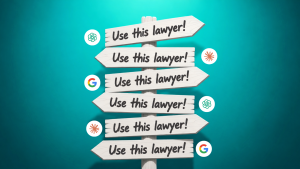












FAQ Strategy for Personal Injury Firms

LAW FIRM SEO THAT WORKS®
Our Focus: Your Firm
Personal injury prospects search before they call. 64% of people with a legal problem say their first step is to conduct research online. A well-built FAQ strategy turns that research phase into a pipeline for your firm, placing your answers directly in front of people who are already deciding whether to hire a lawyer. For personal injury firms specifically, FAQ content does double duty: it addresses the urgent, emotional questions injured people ask, and it signals to search engines that your site is the authoritative source for those answers.
Table of Contents
- Why Personal Injury Clients Ask Questions Before They Call
- How to Choose the Right FAQ Topics for a Personal Injury Firm
- Writing FAQ Answers That Convert Prospects Into Clients
- FAQ Schema, AI Visibility, and What Changed in 2026
- Distributing FAQ Content Across Your Personal Injury Site
- FAQs About FAQ Strategy for Personal Injury Firms
Why Personal Injury Clients Ask Questions Before They Call
Someone who just left the ER after a car accident is not ready to call a lawyer. They want to know if they even have a case. They want to understand what a contingency fee means. They want to know how long they have to file. That research phase is where a strong law firm SEO strategy plants your firm’s name in the conversation.
70% of respondents in a 2022 Attorney Sluice survey said they would look online, specifically using Google or YouTube, before calling an attorney. That figure tells you something concrete about how personal injury clients behave. They arrive at your phone number already informed, or at least attempting to be. Your FAQ content shapes what they learn and who they learn it from.
Personal injury questions are emotionally loaded. “Will I have to go to court?” carries real fear. “How much is my case worth?” reflects financial desperation. These are not abstract queries. They come from people in pain who need a clear, direct answer. A firm that provides those answers earns trust before the first consultation ever happens.
The questions also map directly to search intent. Queries like “do I need a lawyer after a slip and fall” or “how long does a personal injury case take” are informational, but they sit just upstream of hiring intent. A firm that answers them well captures a prospect at the moment of maximum openness.
There is a practical reason to prioritize this content now. In an AI-driven search environment, well-written FAQs help define what a business does and what a user should expect. AI systems pulling answers for personal injury queries are selecting from pages that have already done the work of structuring clear, direct responses. FAQ content is no longer just a conversion tool. It is a prerequisite for visibility in AI-generated results.
How to Choose the Right FAQ Topics for a Personal Injury Firm
The questions your FAQ section should answer are the ones your intake team already fields every day. Start there. If your receptionist hears “how long do I have to file a claim?” five times a week, that question belongs on your site. Real intake data beats keyword research alone, though the two should work together.
Personal injury FAQ topics cluster into four categories. Process questions cover how lawsuits work, what happens at a deposition, and how long cases take. Value questions address settlement amounts, attorney fees, and what damages are recoverable. Eligibility questions ask whether a situation qualifies as a legal claim at all. Logistics questions cover things like whether the firm comes to the client, what documents to bring, and what a free consultation involves.
Each category serves a different stage of the decision process. Process questions attract people who are still learning. Eligibility questions catch people right at the moment they realize they might have a claim. Value questions are almost always asked by people who have already decided to pursue action and are evaluating which firm to trust. Logistics questions come from people who are ready to call.
Prioritize questions with a clear, definitive answer. “What is the statute of limitations for personal injury in California?” has a specific answer: two years under California Code of Civil Procedure Section 335.1. That precision is what search engines reward and what injured clients remember. Vague questions with vague answers serve no one.
Avoid duplicating questions across pages without purpose. If you have FAQ content that is repetitive on your site, meaning the same question and answer appear on multiple pages, mark up only one instance of that FAQ for your entire site. Use your practice area pages to handle case-type-specific questions and reserve your main FAQ hub for the universal questions that apply across all personal injury matters.
Writing FAQ Answers That Convert Prospects Into Clients
The first sentence of every FAQ answer should deliver the actual answer. Full stop. Personal injury prospects are stressed, often in pain, and scanning for reassurance. Burying the answer in a paragraph of legal caveats guarantees they leave before reading it.
Take a question like “How much does a personal injury lawyer cost?” The answer should open with: most personal injury attorneys work on a contingency fee, meaning you pay nothing unless your case settles or wins at trial. Then explain what percentage is typical in your state, what costs might be deducted from the settlement, and why this arrangement removes financial risk for the client. That structure respects the reader’s urgency and builds confidence in the firm’s transparency.
Specificity converts. A firm that says “settlements vary widely” teaches the prospect nothing. A firm that explains the multiplier method for pain and suffering damages, that economic losses are multiplied by a factor of 1.5 to 5 depending on injury severity, gives the prospect something to hold onto. It also demonstrates that the attorneys understand the mechanics of valuation, which is exactly what an injured person wants to believe about the firm they hire.
Keep individual answers between 75 and 200 words. Short enough to scan, long enough to be genuinely useful. If an answer requires more space, it may be better suited as a standalone blog post or a practice area page section, with the FAQ answer providing a brief summary and a link to the fuller explanation.
Tone matters more in personal injury than in almost any other practice area. The person reading your FAQ about wrongful death claims is grieving. The person reading about car accident settlements may be dealing with mounting medical bills. Write with empathy, but without condescension. Direct answers that acknowledge the emotional weight of the situation convert better than clinical responses that ignore it.
FAQ Schema, AI Visibility, and What Changed in 2026
FAQPage schema markup using JSON-LD has long been a tool for earning expanded search appearances. The landscape shifted in May 2026. As of May 7, 2026, FAQ rich results are no longer appearing in Google Search, and Google will be dropping the FAQ search appearance, rich result report, and support in the Rich Results Test in June 2026. That change does not make FAQ schema worthless. It changes what the schema is for.
The value of FAQPage markup now lives primarily in AI systems. FAQPage schema originally helped search engines understand common questions and answers on a page. In an AI-driven search environment, well-written FAQs help define what a business does and what a user should expect. AI Overviews, ChatGPT, Claude, and other large language models pull structured content when assembling answers to user queries. A personal injury firm with properly marked-up FAQ content is more likely to have its answers surfaced in those AI-generated responses.
This is the core argument for Answer Engine Optimization in the personal injury space. AI systems are not ranking pages. They are selecting sources. FAQ schema signals to those systems that your page contains a discrete, well-defined question paired with an authoritative answer. That signal matters even when no rich result appears in traditional search.
You must include the required properties for your content to be eligible for display as a rich result. Even with the deprecation of FAQ rich results for general sites, the underlying schema properties remain part of how AI systems parse and categorize page content. Maintain your FAQPage JSON-LD with accurate question and answer text that matches what appears on the page. Your structured data must be a true representation of the page content.
One additional note: if your government-focused or health-focused site has a list of questions and answers, you can use FAQPage structured data to help people find that information on Google. For personal injury firms, the path to AI visibility runs through accurate, schema-backed FAQ content that answers real questions with real specificity.
Distributing FAQ Content Across Your Personal Injury Site
A single FAQ page is a starting point, not a complete strategy. Personal injury firms with strong FAQ architecture place question-based content at multiple levels of the site: on the homepage, within each practice area page, and on standalone FAQ hubs organized by topic.
Your car accident practice area page should carry FAQs specific to car accident claims. How does comparative negligence affect my settlement? What if the other driver was uninsured? Do I have to accept the insurance company’s first offer? Those questions belong on that page, not buried in a general FAQ section that covers every case type at once. This approach aligns with how search intent works: someone searching “car accident FAQ” has different needs than someone searching “personal injury FAQ.”
Standalone FAQ hub pages work well for process-oriented questions that span multiple case types. Questions about contingency fees, statute of limitations rules, how long cases take, and what to expect at a deposition apply equally to car accident, slip and fall, and medical malpractice cases. A hub page collecting these universal questions builds topical depth and gives the site an internal linking target that practice area pages can reference.
Tie your FAQ content to your blog strategy. A question like “what happens if I was partially at fault for my accident?” deserves a 75-word FAQ answer and a 1,000-word blog post that walks through comparative fault rules state by state. The FAQ captures the quick-answer searcher. The blog post captures the deeper researcher. Both signal expertise to search engines and to the AI systems that increasingly mediate how legal content reaches injured people.
The questions your Google Business Profile Q&A section receives are also FAQ research gold. Real questions from real people in your market, asked in their own language. Pull those into your site’s FAQ content. The phrasing people use when asking questions on a GBP listing is often closer to natural language search queries than anything a keyword tool generates, which makes it especially valuable for capturing voice search and conversational AI queries.
If you want a content strategy built around the specific questions your future clients are already asking, law firm marketing at Custom Legal Marketing starts with that research. We build FAQ strategies that reach prospects at every stage of the decision process, from first search to signed retainer. Contact us to talk about what that looks like for your firm.
FAQs About FAQ Strategy for Personal Injury Firms
How many FAQ questions should a personal injury firm publish on its website?
There is no fixed number, but depth matters more than volume. A firm that answers 20 questions thoroughly, with specific and accurate information, will outperform one that publishes 100 vague answers. Start with the questions your intake team hears most often, organize them by case type and topic, and expand from there as you identify gaps in what your site currently addresses.
Should FAQ answers be written by an attorney or a marketing team?
The best FAQ answers are written collaboratively. Marketing writers handle structure, readability, and search optimization. Attorneys verify legal accuracy, add jurisdiction-specific details, and ensure nothing in the answer creates an unintended attorney-client relationship. The attorney’s name and credentials should appear on the page to support E-E-A-T signals, which Google uses to evaluate the trustworthiness of legal content.
Does FAQ schema markup still matter after Google deprecated FAQ rich results in May 2026?
Yes. While Google dropped FAQ rich results for general websites as of May 7, 2026, FAQPage schema in JSON-LD format continues to help AI systems understand and categorize your content. Tools like Google AI Overviews, ChatGPT, and Claude use structured content signals when selecting sources for their answers. Accurate, properly implemented FAQ schema improves the likelihood that your firm’s answers are surfaced in AI-generated responses to personal injury queries.
What personal injury questions are most likely to appear in AI-generated search results?
Questions with clear, factual answers tend to perform best in AI-generated results. Examples include questions about statute of limitations deadlines, how contingency fees work, what damages are recoverable in a personal injury case, and what steps to take immediately after an accident. Questions that require jurisdiction-specific answers, such as comparative fault rules or damage caps, also appear frequently because they have definitive answers that AI systems can verify and attribute to a source.
How often should a personal injury firm update its FAQ content?
Review your FAQ content at minimum once per year, and immediately whenever relevant laws change in your jurisdiction. Statute of limitations rules, damage caps, and insurance minimum requirements are all subject to legislative change. An outdated FAQ answer that cites a repealed statute or an old filing deadline is worse than no answer at all. It signals to both users and search engines that the firm’s content cannot be trusted for current legal guidance.
More Resources About FAQ Content for Personal Injury Firms
What Our Clients Are Saying
