








Building Topical Authority in Personal Injury

LAW FIRM SEO THAT WORKS®
Our Focus: Your Firm
Personal injury is one of the most searched legal categories in the United States, with terms like “car accident lawyer” drawing 76,000 monthly searches and “personal injury attorney” pulling another 63,000. That volume creates fierce competition, and firms that win it consistently share one trait: they have built genuine topical authority around personal injury law. A single practice area page and a handful of blog posts cannot compete against a firm whose website comprehensively covers every angle of the subject, from negligence and premises liability to wrongful death and product liability. Topical authority is the structural advantage that separates firms that dominate search from those that chase it.
Table of Contents
- What Topical Authority Means for Personal Injury Firms
- Mapping the Full Personal Injury Topic Universe
- Content Architecture That Signals Expertise to Google
- E-E-A-T and YMYL: The Standards Personal Injury Content Must Meet
- Topical Authority and AI Search Visibility for Personal Injury Firms
- FAQs About Building Topical Authority in Personal Injury
What Topical Authority Means for Personal Injury Firms
Topical authority measures how thoroughly and consistently a website covers a subject area. Search engines assess a site’s credibility and depth on a particular subject, looking at how comprehensively and consistently the site covers the topic rather than whether it includes a specific keyword. For a personal injury firm, that means Google evaluates the full body of your content, not just your homepage or your car accident page.
A study examining 253,800 search engine results concluded that page-level topical authority is the largest on-page ranking factor for a webpage’s Google ranking. That finding has direct implications for personal injury attorneys competing in high-volume keyword categories. Ranking for “personal injury attorney near me” or “slip and fall lawyer” requires more than an optimized title tag. It requires a site that demonstrates systematic expertise across the entire subject.
Personal injury content falls squarely within Google’s YMYL (Your Money or Your Life) category. YMYL topics can directly and significantly impact people’s health, financial stability, or safety, because the topic itself could cause harm if the content is not accurate and trustworthy. That classification raises the bar for every page on your site. Raters apply the most rigorous E-E-A-T standards, and legal information should be authored or reviewed by qualified attorneys.
The practical consequence: a personal injury firm cannot publish thin, generic content and expect to rank. Search engines prioritize depth, consistency, and content relationships over isolated keywords, which means the sites that rank best are those with structured, topic-driven ecosystems of content. Building that ecosystem is the work of topical authority.
Effective law firm SEO in personal injury requires treating every subtopic, from comparative negligence to maximum medical improvement, as a content opportunity that strengthens the site’s overall authority signal.
Mapping the Full Personal Injury Topic Universe
Topical authority in personal injury starts with a complete map of every question an injured person might ask, from the moment of the accident through settlement or verdict. The keyword data makes this concrete. Among the top informational searches, people ask “what is a personal injury claim,” “how long does a personal injury case take,” “what is negligence in personal injury,” and “how to prove negligence in a personal injury case.” Each of those queries represents a content gap that a competitor may already be filling.
High-volume transactional terms like “car accident lawyer” (76,000 monthly searches) and “personal injury attorney” (63,000 monthly searches) are the destination, but informational content is the path. A firm that answers “what is comparative negligence,” “what is a demand letter in personal injury,” and “how are personal injury settlements calculated” captures searchers early and establishes the expertise that supports transactional rankings.
Long-tail queries add specificity. Searches like “lawyer for spinal cord injury from accident,” “attorney for slip and fall in grocery store,” and “how to sue a trucking company after accident” reflect real situations people face. These searches have lower competition and higher conversion rates because the person asking already knows exactly what happened to them.
The topic map for a personal injury firm spans at least four layers. The first is the primary practice area, personal injury broadly. The second covers major case types: car accidents, truck accidents, motorcycle accidents, slip and fall, medical malpractice, premises liability, product liability, wrongful death. The third covers legal concepts within each case type: negligence, duty of care, comparative fault, damages, statutes of limitations. The fourth covers the process: what to do after an accident, how to document injuries, what a deposition involves, how settlements are calculated.
A content gap analysis against competitors often reveals which of these layers a firm has left uncovered. Those gaps are where topical authority is lost and where it can be gained.
Content Architecture That Signals Expertise to Google
A disorganized collection of blog posts does not build topical authority. Structure matters as much as volume. The pillar-and-cluster model organizes personal injury content so that Google can understand the relationships between pages and recognize the site as a comprehensive resource.
A pillar page covers the broad practice area. For personal injury, that page addresses the full scope: what personal injury law covers, the types of cases, the legal process, and what clients can expect. Cluster pages go deeper on each subtopic. A cluster page on car accident claims covers negligence standards, insurance negotiations, comparative fault rules, and common injuries. Another cluster page on premises liability covers duty of care, the distinction between invitees and licensees, and how to document a slip and fall.
Internal linking connects these pages deliberately. A well-structured content network, especially when using internal linking between hubs and spokes, makes it easier for search engines to understand content architecture and prioritize the right pages. Each cluster page links back to the pillar, and the pillar links out to each cluster. That structure passes authority and signals topical depth simultaneously.
Site architecture reinforces this. URL structures like /personal-injury/, /personal-injury/car-accidents/, and /personal-injury/car-accidents/truck-accident-lawyer/ communicate hierarchy clearly. Schema markup, including LegalService and Attorney schema, adds structured data that helps Google parse the firm’s expertise and service areas.
Case results pages serve a dual function. They demonstrate real-world outcomes, which supports E-E-A-T, and they create natural opportunities to link back to relevant practice area pages. A $3 million settlement for a road defect case, for example, links naturally to both the car accident and premises liability clusters. That kind of cross-linking strengthens the topical network across the entire site.
E-E-A-T and YMYL: The Standards Personal Injury Content Must Meet
Personal injury content carries real consequences for real people. Someone reading about what to do after a car accident or whether they have a valid slip and fall claim is making decisions that affect their financial recovery. For a specific topic to be YMYL, the topic itself must potentially impact people’s health, financial stability, or safety, or the welfare or well-being of society. Personal injury law meets that standard on every dimension.
The January 2025 edition of Google’s Search Quality Rater Guidelines explicitly references generative AI and AI-generated content, and while Google does not ban AI-generated material, the guidelines stress that content creators must meet the highest standards of E-E-A-T, particularly for sensitive or YMYL topics. For a personal injury firm, that means attorney attribution on every substantive page, accurate legal information, and content that reflects genuine case experience.
Author bios matter. An attorney bio that lists bar admissions, case experience, and specific practice areas gives Google’s quality raters the credential signals they look for on YMYL content. Legal information should be authored or reviewed by qualified attorneys to satisfy the rater standards that inform Google’s algorithm training.
Case results pages, media appearances, and client reviews all contribute to the trustworthiness signal. According to Custom Legal Marketing’s own focus groups, people often trust that experts featured in local news have been vetted, which makes media coverage a credibility signal that extends beyond SEO. Roughly 60% of people trust local news to keep them informed about their communities, according to the Knight Foundation, which means a firm featured in local media carries an authority signal that generic content cannot replicate.
Content freshness also factors in. Outdated information, especially regarding laws or legal processes, can quickly become harmful, so reviewing and updating content regularly is essential. Statutes of limitations vary by state and can change. Comparative fault rules differ across jurisdictions. A personal injury firm publishing accurate, current information on these legal standards demonstrates the ongoing commitment to accuracy that YMYL standards require.
Topical Authority and AI Search Visibility for Personal Injury Firms
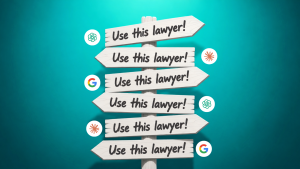
Search behavior is shifting. AI-powered answer engines, including Google AI Overviews, ChatGPT, and Perplexity, increasingly surface responses to legal questions without requiring the user to click through to a website. Topical authority matters even more for AI-powered search platforms than traditional Google results, because ChatGPT, Perplexity, and Google’s AI Overviews generate answers by summarizing information from multiple sources, and they tend to highlight sites with deep, well-structured coverage because those hubs reliably address adjacent questions.
The overlap between organic rankings and AI citations is growing. At the start of one tracking study, only 32.3% of AI Overview citations came from pages that also ranked organically. By September 2025, that had grown to 54.5%. A personal injury firm with strong topical authority, the kind that earns organic rankings across a broad keyword set, is increasingly positioned to earn AI citations as well.
Structured answers accelerate this. When a page directly answers “what is comparative negligence” or “how long does a personal injury case take” in a clear, concise format, it becomes a candidate for both featured snippets and AI Overview citations. For the first time, Google has provided clear criteria on how content must be structured to appear in AI summaries, and clear answers with good structure are key.
This is where Answer Engine Optimization intersects with topical authority. A personal injury firm that formats content to answer specific questions directly, with definition boxes, structured lists, and concise summaries, gives AI systems exactly what they need to cite that content in generated responses. The firms earning citations in ChatGPT and Google AI Overviews for personal injury queries are the ones whose content is both authoritative and structurally clear.
Building this visibility takes time. Initial results typically appear within one to three months of consistent content publication, but meaningful authority requiring broad ranking improvements usually takes twelve to twenty-four or more months, depending on starting position, competition level, and content production velocity. Personal injury is one of the most competitive legal categories online. The firms that start building topical depth now are the ones that will hold dominant positions when competitors are still trying to catch up.
Custom Legal Marketing works with personal injury firms across the country to build the kind of content architecture, keyword coverage, and E-E-A-T signals that produce lasting organic visibility. If your firm’s website covers only a fraction of the personal injury topic universe, contact us to find out what a full topical authority strategy looks like for your market. Comprehensive law firm marketing built around topical depth is what separates firms that rank from firms that advertise just to stay visible.
FAQs About Building Topical Authority in Personal Injury
How many pages does a personal injury firm need to build topical authority?
There is no fixed number, but a firm covering only its primary practice area page and a few blog posts will not compete against sites with structured content clusters. A complete topical map for personal injury includes pages for every major case type (car accidents, truck accidents, slip and fall, medical malpractice, premises liability, product liability, wrongful death), legal concepts within each case type, and process-oriented content that answers the questions injured people ask before they hire an attorney. That typically means dozens of substantive pages organized around a clear pillar-and-cluster architecture, with internal linking that connects related content throughout the site.
Why does Google treat personal injury content differently from other website content?
Personal injury content falls under Google’s YMYL (Your Money or Your Life) classification because it can directly affect a person’s financial stability and safety. Google’s Search Quality Rater Guidelines, last updated in September 2025, require YMYL content to meet the highest E-E-A-T standards, meaning it should be authored or reviewed by qualified attorneys, contain accurate and current legal information, and come from a source with a verifiable reputation. Pages that fail these standards are rated as low quality, which informs the algorithm updates that determine rankings over time.
What is the difference between topical authority and domain authority for personal injury SEO?
Domain authority is a third-party metric that estimates a site’s overall strength based largely on backlinks. Topical authority measures how comprehensively a site covers a specific subject area. A study of 253,800 search results found that page-level topical authority is the largest on-page ranking factor, stronger than the overall domain traffic of the site hosting the page. For personal injury firms, this means a mid-sized firm with deep, well-structured content on car accidents, premises liability, and wrongful death can outrank a larger firm with a higher domain authority score but shallow, scattered content coverage.
How does topical authority affect a personal injury firm’s visibility in AI Overviews and ChatGPT?
AI-powered search tools, including Google AI Overviews, ChatGPT, and Perplexity, favor sites with deep, well-structured coverage of a subject because those sites reliably address the adjacent questions that AI systems need to synthesize complete answers. A personal injury firm with comprehensive content clusters, clear answer formatting, and attorney-attributed pages is better positioned to earn citations in AI-generated responses. The overlap between organic rankings and AI Overview citations has grown significantly, reaching 54.5% by September 2025, which means building topical authority for traditional search increasingly translates to AI search visibility as well.
How long does it take to build topical authority in personal injury?
Early ranking movements from consistent content publication typically appear within one to three months. Meaningful topical authority, the kind that produces broad ranking improvements across a full keyword set, generally takes twelve to twenty-four months or longer, depending on the competitiveness of the market, the firm’s starting position, and the pace of content production. Personal injury is among the most competitive legal categories online. Firms that begin building structured content depth now gain a compounding advantage over competitors who wait, because topical authority accumulates over time and becomes harder for late entrants to replicate quickly.
More Resources About On-Page SEO
- On-Page SEO for Personal Injury Pages
- Keyword Research for Personal Injury Firms
- Search Intent Mapping for Personal Injury Keywords
- Image SEO for Law Firm Websites
- E-E-A-T for Personal Injury Law
- YMYL Content Guidelines for Personal Injury Law Firms
- Author Bios and Personal Injury Attorney Pages for SEO
What Our Clients Are Saying
