











Infographics for Personal Injury Law Firms

LAW FIRM SEO THAT WORKS®
Our Focus: Your Firm
The best law firm marketing comes with a No Competition™ Guarantee.
Most people searching for legal help online have no idea what they’re looking for. They type in a question, scan a page for two seconds, and move on. An infographic stops that pattern cold. For law firms, that’s not a design preference — it’s a measurable advantage in a medium where attention is the scarcest resource.
Table of Contents
- Why Infographics Give Law Firms a Competitive Edge in Search
- Choosing the Right Legal Topics for Infographic Content
- Designing Infographics That Earn Backlinks and AI Citations
- Distributing Legal Infographics for Maximum Reach and Link Value
- How Infographics Support Answer Engine Optimization for Law Firms
- FAQs About Infographics for Law Firms
Why Infographics Give Personal Injury Law Firms a Competitive Edge in Search
Readers are 30 times more likely to engage with a law firm’s infographic than a written article, according to data compiled across multiple content marketing studies. Businesses that use infographics see 178% more inbound links and 650% higher engagement compared to text-only posts. Those numbers matter especially in law firm marketing, where the content competing for the same search terms is often dense, jargon-heavy, and visually indistinguishable from every other firm’s page.
Legal topics are inherently complicated. A personal injury claim timeline, the steps in a workers’ comp appeal, or the difference between comparative and contributory negligence — these are all subjects that confuse prospective clients. An infographic translates that confusion into clarity. 61% of consumers find that infographics are the most effective way to help them retain information. Retention matters because a client who understands your explanation of the claims process is far more likely to call your firm than one who walked away confused.
The speed advantage is also real. Visual formats are processed 60,000 times faster than text and retain attention longer. A prospective client scanning your personal injury practice area page will absorb a well-designed visual in seconds. The same information buried in four paragraphs may never get read at all.
Search engines reward this behavior. Pages that hold attention longer, earn more backlinks, and get shared more frequently send stronger ranking signals. Infographics contribute to all three. Posts with infographics create 178% additional inbound backlinks compared to text-only content — and for law firms trying to build topical authority around practice areas like car accidents, slip-and-fall, or medical malpractice, those links carry real weight.
AI answer engines add another dimension. ChatGPT, Perplexity, and Claude all process multimodal sources. An infographic published with proper structured data, an embed code, and a clear attribution block is a resource these systems can extract, cite, and surface in AI-generated answers. That visibility is no longer limited to Google’s bots alone.
Choosing the Right Legal Topics for Infographic Content
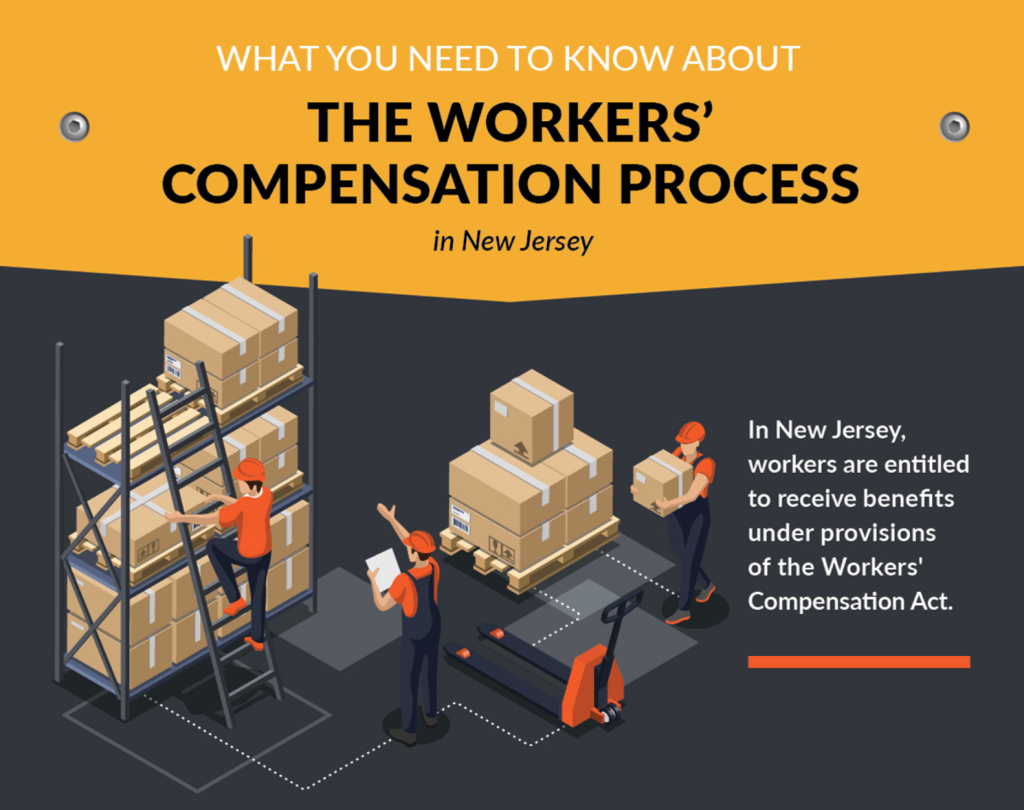
Topic selection is where most law firm infographics fail before they’re even designed. A graphic that explains something only lawyers care about earns no shares. The right topic sits at the intersection of what clients are confused about and what journalists, bloggers, and educators would actually want to publish.
Personal injury firms have a natural advantage here. The claims process, liability rules, statute of limitations deadlines, and insurance settlement timelines are all subjects that prospective clients actively search for — and almost always misunderstand. A visual breaking down the personal injury claim timeline in your state, step by step, gives a local news outlet or legal education blog something genuinely useful to embed and attribute.
Newsworthiness matters too. An infographic built around current data — say, traffic fatality trends in your city, or the share of workers’ comp claims denied at the initial stage — gives journalists a ready-made visual for a story they’re already planning to write. That’s the kind of asset that earns organic pickup without requiring a cold outreach campaign.
Those in search of legal help often don’t know what they don’t know — like what a complaint is or the consequences of failing to answer one — and attempt to take a crash course in the law by searching the web. That behavior creates a direct opportunity. An infographic that answers the question a prospective client typed into Google — “what happens after I file a personal injury claim?” — captures attention at exactly the right moment.
Strong topic formats for law firm infographics include state-specific claim timelines, step-by-step explanations of legal processes, comparative data on local legal trends, and visual breakdowns of legal terms that clients encounter but rarely understand. Each of these formats serves two audiences at once: the prospective client who needs clarity, and the publisher or AI engine looking for a citable, embeddable resource.
Avoid topics that are too narrow to attract outside interest. An infographic on a specific case outcome or an internal firm milestone has no syndication potential. The test is simple: would a legal education blog or a local news editor find this useful enough to share with their audience? If the answer is yes, the topic is worth developing.
Designing Infographics That Earn Backlinks and AI Citations

Design decisions made before a single pixel is placed determine whether an infographic earns links or sits unnoticed on your website. The goal is a visual that publishers want to embed and that AI systems can extract structured information from — those two objectives point to the same design principles.
Start with compression and load speed. A heavy image file that slows your page down undermines both user experience and the technical SEO signals that law firm SEO depends on. Optimize the file size without sacrificing resolution. An infographic published at 72dpi for screen viewing loads faster and still looks sharp on any device.
Include your firm’s name, web address, and phone number directly in the image. When a publisher embeds your infographic without the surrounding HTML context, the attribution travels with the image itself. This is a small detail that protects your brand visibility across every platform where the graphic appears.
Publish the infographic alongside an embed code. The code should contain an HTML snippet that links back to the original source page with a dofollow tag. This single step is what separates infographics that generate backlinks from those that generate only views. Every time a publisher embeds your graphic using your code, your firm earns a dofollow link from their domain.
Add a short paragraph beneath the infographic describing its purpose, the author (ideally a named attorney at your firm), and the data sources used. This supports E-E-A-T signals that both Google and AI answer engines use to evaluate the credibility of a page. An infographic attributed to a licensed attorney, backed by cited sources, carries far more authority than an anonymous graphic with no provenance.
Using colored infographics can boost a reader’s attention span and comprehension by 82%. Color choices should match your firm’s visual identity while also guiding the reader’s eye through the information in sequence. Legal infographics that use a clear visual hierarchy — numbered steps, directional arrows, or tiered sections — perform better in both comprehension and sharing than those that present information as a flat list.
Distributing Legal Infographics for Maximum Reach and Link Value
Publishing an infographic on your website is the starting point, not the finish line. Distribution is where the backlinks, citations, and AI visibility actually come from. A targeted outreach plan built around three specific audiences produces the most reliable results for law firms.
Local journalists and news editors are the first audience to target. A personal injury firm sitting on an infographic showing local traffic fatality data or county-level workers’ comp claim trends has something a reporter covering those beats can use directly. Pitch it as a reference resource, not a press release. Personalized emails that explain exactly how the graphic fits a story the outlet is likely already working on get responses. Bulk sends get deleted.
Legal education blogs and university law school resources are the second audience. These sites link to practical, publicly accessible legal content because their readers — students, researchers, and legal aid organizations — benefit from it. Properly curated online resources can direct anyone in need of legal information or advice, especially those with little or no understanding of their legal needs, to much-needed help. An infographic that simplifies a complex process fits exactly what these platforms want to offer their audiences.
Industry publications and legal trade media round out the third category. Outlets covering workers’ compensation, insurance defense, or personal injury law regularly feature data visualizations and research summaries. An infographic built on original data or a unique angle on a familiar topic has a genuine shot at placement.
After distribution, track mentions with Google Alerts. When your infographic appears on a site without the embed code link, reach out. Most publishers will add the attribution link when asked politely — they published the graphic because they found it valuable, and adding a source credit is a small ask. This follow-up step recovers backlinks that would otherwise be lost.
Social distribution amplifies reach in parallel. Infographics are liked and shared on social media 3x more than other content types. Sharing your infographic on LinkedIn, where roughly half of adults who have a bachelor’s or advanced degree say they use the platform, puts it in front of the professional and referral network most likely to amplify it further. Instagram and Facebook extend reach to the consumer audience — the prospective clients your firm is ultimately trying to reach.
How Infographics Support Answer Engine Optimization for Law Firms
AI-powered answer engines — ChatGPT, Perplexity, Google’s AI Overviews, Claude — are reshaping how people find legal information. A well-structured infographic is one of the few content formats that serves both traditional search and AI-driven discovery simultaneously. Understanding why requires looking at how these systems evaluate and cite content.
AI engines prioritize sources that combine authority with clarity. An infographic published by a named attorney, attributed to verifiable data, and embedded on a page with proper schema markup signals exactly the kind of authoritative, structured content these systems are built to surface. Answer Engine Optimization for law firms includes making your visual content extractable — meaning AI systems can parse the information in your infographic and include it in a generated answer.
Structured data on the page hosting your infographic amplifies this effect. Adding ImageObject schema that identifies the image, its author, its subject, and its source URL gives AI crawlers the metadata they need to treat your infographic as a citable resource rather than a decorative element. This is the same principle that makes FAQ schema and LegalService schema effective — you’re giving machines a structured signal they can act on.
The embed code strategy also contributes here. When your infographic appears on multiple authoritative domains — a law school resource page, a legal aid organization’s site, a local news outlet — the pattern of citations signals to AI systems that your content is widely regarded as reliable. That signal increases the probability of your firm’s content appearing in AI-generated answers about the legal topics your infographic covers.
For lead generation specifically, 46% of B2B marketers name data-driven infographics their top-performing format. For law firms, the lead generation mechanism works through visibility: a prospective client sees your infographic cited in an AI answer, clicks through to your site, and encounters a firm that clearly understands their situation well enough to explain it visually. That credibility converts. Custom Legal Marketing builds infographic strategies that account for both traditional search ranking and AI citation patterns — contact us to discuss what that looks like for your firm’s practice areas.
FAQs About Infographics for Law Firms
How long does it take for a law firm infographic to start generating backlinks?
Most law firm infographics begin generating backlinks within four to eight weeks of a focused outreach campaign. The timeline depends on the quality of the topic, the relevance to the target publications, and the consistency of the follow-up process. Infographics built around timely local data or newsworthy legal trends tend to attract links faster because journalists can use them immediately for stories already in progress.
Does the infographic need to be created by a graphic designer, or can attorneys create them in-house?
Professional design produces better results for syndication and link-building purposes. Publishers and AI engines both evaluate the visual quality and structural clarity of an infographic when deciding whether to embed or cite it. An in-house tool like Canva can produce acceptable results for social media use, but for infographics intended to earn backlinks from legal education sites, news outlets, or industry publications, investing in professional design is worth the cost.
What file formats work best for law firm infographics published online?
PNG and JPEG are the most widely supported formats for web publishing. PNG preserves sharpness for graphics with text and fine lines, making it the better choice for most legal infographics. For the embed code version, host the image on your own server rather than a third-party platform — this ensures the link in the embed code points to a stable URL on your domain and that the backlink credit flows to your site.
Can infographics help a law firm rank in Google image search?
Yes. Google displays image results in a meaningful share of searches, and infographics optimized with descriptive file names, alt text, and ImageObject schema have a real chance of appearing in those results. Image search traffic is often overlooked in law firm SEO strategies, but a prospective client who finds your infographic while searching for information about a personal injury claim timeline is already engaged with your content before they even reach your website.
How many infographics should a law firm publish per year?
Quality and distribution effort matter more than volume. One infographic per quarter, each built around a topic with genuine syndication potential and supported by a full outreach campaign, will outperform twelve infographics published without a distribution plan. The goal is to create assets that earn links and citations over months or years, not to fill a content calendar. Firms with multiple practice areas can scale by producing one infographic per major practice area annually, targeting the publications and platforms most relevant to each topic.
More Resources About Video, Audio, and Visual
What Our Clients Are Saying
