





Earning ChatGPT Citations as a Law Firm

LAW FIRM SEO THAT WORKS®
Our Focus: Your Firm
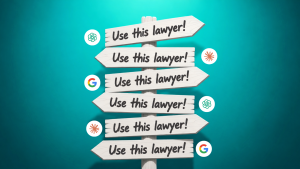
Every week, roughly 900 million people use ChatGPT, and a growing share of them are asking it to recommend professionals, including lawyers. Among U.S. adults under 30, 58% have used ChatGPT, up from 43% in 2024. That audience is your future client base. When someone types “best personal injury lawyer in Phoenix” or “what should I do after a truck accident in Dallas” into ChatGPT, the platform names a small number of firms. Getting named consistently is now a concrete marketing objective, and it requires a strategy built specifically for how AI engines select and cite sources.
Table of Contents
- ChatGPT Citations Have Separated From Google Rankings
- The Four Signals ChatGPT Uses to Decide Which Lawyer to Recommend
- How to Structure Law Firm Content for ChatGPT Citations
- Legal Directories, Reddit, and YouTube: The Off-Site Citation Surface
- Tracking and Maintaining ChatGPT Citation Standing
- FAQs About Earning ChatGPT Citations as a Law Firm
ChatGPT Citations Have Separated From Google Rankings
A firm ranking number one on Google no longer has any reliable claim on a ChatGPT citation. Ahrefs analysis found that ChatGPT citations match only 6.82% of Google’s top 10 results, and even when ChatGPT pulls from a search index, it applies its own selection layer that filters and reshuffles which links appear. The two systems run on different logic.
That gap has widened fast. The overlap between pages ranking in Google’s top 10 and pages cited inside AI-generated answers dropped from 70% to under 20%. A firm that spent a decade building Google rankings cannot assume those rankings translate into AI visibility. They often do not.
28.3% of ChatGPT’s most-cited pages have zero organic visibility in Google search, meaning a page that ranks nowhere on Google can still be the primary source ChatGPT references for a given topic. For law firms, this creates a real opening. A smaller firm with structurally clean, question-format content can outrank a dominant regional firm in ChatGPT responses while still sitting on page two of traditional search results.
This is the core argument for treating Answer Engine Optimization as a separate discipline. The tactics that earn Google rankings, high keyword density, backlink volume, domain authority, are weak predictors of AI citation. What matters is how clearly a page answers a specific question, how consistently a firm’s identity appears across the open web, and whether external sources ChatGPT trusts reinforce the firm’s authority on that topic.
The Four Signals ChatGPT Uses to Decide Which Lawyer to Recommend
ChatGPT does not crawl the web the way Google does. It works from training data, live web retrieval through browse tools, and content licensing partnerships. When a potential client asks for a lawyer recommendation, the platform synthesizes information from sources it considers authoritative and constructs a response naming a small number of firms. Four categories of signals determine which firms make that list.
The first is content extractability. ChatGPT favors pages structured so it can pull a self-contained answer from a single section. Question-format H2 headings that mirror real client phrasing, a 40 to 60 word direct answer under each heading, and statute citations with jurisdictional detail all help the model extract a usable passage. Research shows 44.2% of all LLM citations come from the first 30% of text. Front-loading the answer is not a stylistic choice; it is a citation strategy.
The second is attorney-level authority. Named attorney bylines with verifiable credentials matter because ChatGPT applies heightened scrutiny to legal content under YMYL (Your Money or Your Life) guidelines. Pages without an author, or with generic bios, get downweighted. Bar admissions, years in practice, and notable case results all contribute. The broader subject of law firm SEO has long emphasized E-E-A-T signals, and those signals carry even more weight inside AI citation logic than they do in traditional search.
The third is external validation. ChatGPT cross-references a firm’s name against directories, bar profiles, news outlets, YouTube, and Reddit before citing. Domains with significant brand mentions on Quora and Reddit have roughly 4x higher chances of being cited than those with minimal activity. Consistent identity across the open web is not a bonus; it is a prerequisite.
The fourth is technical structure. Schema markup, semantic HTML, and a clean heading hierarchy let retrieval systems parse a page without ambiguity. FAQPage schema on Q&A blocks is critical. Attorney, LegalService, and LocalBusiness schema round out the core set. Strong content with no schema is, from ChatGPT’s perspective, half-invisible. Microsoft’s Fabrice Canel confirmed at SMX Munich in March 2025 that “Schema markup helps Microsoft’s LLMs understand content,” with Bing’s Copilot specifically using structured data to interpret web content. The same principle applies across AI platforms.
How to Structure Law Firm Content for ChatGPT Citations
Content structure is the most actionable variable a law firm controls. Comparison pages with three tables earn 25.7% more citations, validation pages with eight list sections earn up to 26.9% more citations, and shortlist pages averaging ten words or fewer per sentence earn 18.8% more citations. These are not abstract formatting preferences; they reflect how retrieval systems extract and evaluate passages.
Section length matters more than most firms realize. Pages with 120 to 180 words between headings receive 70% more ChatGPT citations than those with sections under 50 words. The goal is digestible depth. A section long enough to establish expertise but short enough to be extracted as a standalone answer.
Content freshness is another hard factor. Content updated in the past three months averages 6 citations versus 3.6 for outdated pages. A practice area page written in 2021 and never refreshed will lose citation standing to a competitor that publishes updated content quarterly, even if the older page still ranks on Google. For personal injury firms especially, where laws, verdict data, and local court procedures change, freshness signals read as credibility signals to AI engines.
ChatGPT is more likely to cite content that uses definite language (not vague), contains a question mark, has a high entity density, has a balanced mix of facts and opinions, and uses simple writing structures. For a personal injury page, this means naming specific statutes (“under Texas Civil Practice and Remedies Code Section 33.001”), citing local courts by name, and answering the exact questions injured people actually type into AI tools.
Distribution amplifies everything. Distributing content to a wide range of publications can increase AI citations by up to 325% compared to only publishing the content on your own site. Press releases, earned media placements, and attorney-authored articles in legal publications all extend the citation surface beyond the firm’s own domain, and that extended presence is exactly what ChatGPT’s external validation check looks for.
Legal Directories, Reddit, and YouTube: The Off-Site Citation Surface
ChatGPT does not limit its research to a firm’s website. It checks the broader web to corroborate what a firm claims about itself. The directories and platforms it weighs most heavily are the ones law firms often treat as secondary priorities in their law firm marketing plans.
Avvo, Justia, Martindale-Hubbell, and Super Lawyers all feed into ChatGPT’s entity verification. A filled-out profile on each of these platforms, with consistent name, address, phone number, and practice area information, tells the model that the firm is a real, established entity. Bar association listings and disciplinary records that match the website are also cross-referenced. Any inconsistency in the firm’s identity across these sources creates doubt that suppresses citations.
Reddit’s weight has grown significantly. OpenAI’s content licensing partnership with Reddit raised the platform’s citation frequency in ChatGPT responses. For personal injury and criminal defense queries, organic Reddit presence, meaning attorneys or staff participating genuinely in legal subreddits, now functions as part of the citation surface. A firm with no Reddit footprint is invisible to one of ChatGPT’s most-checked external sources.
YouTube has emerged as one of the most-cited sources in AI Overviews, with Ahrefs research on 75,000 brands finding that brand mentions in YouTube video titles and transcripts are the single strongest correlating factor with AI Overview visibility among all signals studied. Attorney explainer videos with clean transcripts serve dual purposes: they build the YouTube presence that AI engines cross-reference, and they generate transcript text that can be indexed and cited directly.
The firms that earn consistent ChatGPT citations have built what amounts to a corroborated identity across the open web. Their website, directory profiles, bar listings, YouTube channel, and Reddit presence all tell the same story about the same firm. ChatGPT reads that consistency as trustworthiness, and trustworthiness is the prerequisite for a recommendation.
Tracking and Maintaining ChatGPT Citation Standing
Earning a ChatGPT citation once is not the same as holding it. Research reveals that AI citations can change by up to 60% in just one month. A firm cited consistently today can drop from ChatGPT’s responses within weeks if a competitor publishes stronger content, refreshes their directory profiles, or earns new press coverage. Citation standing requires active monitoring, not a one-time optimization pass.
Manual prompt testing, typing client questions into ChatGPT and noting whether the firm appears, works for occasional spot-checks. Systematic monitoring requires a dedicated platform. The CLM Sequoia AI Monitor runs scheduled prompts across ChatGPT, Perplexity, Claude, Gemini, Microsoft Copilot, Google AI Overviews, and AI Mode, logging every citation, sentiment shift, and competitor appearance. Firms enrolled in the beta program saw measurable lifts in citations, AI-driven traffic, and signed cases within 90 to 120 days.
Sommers Schwartz, a Detroit medical malpractice firm running on CLM Sequoia, saw a 107% increase in leads from ChatGPT, Perplexity, Gemini, and Claude four months after enrolling in the AI Monitor. Briskman Briskman and Greenberg in Chicago closed citation gaps for bike accident queries, including featured snippet placements built from CLM Sequoia research reports. These outcomes came from a combination of content restructuring, schema implementation, directory hygiene, and ongoing citation monitoring, not from any single tactic.
The firms building citation standing now are accumulating a structural advantage that compounds. Once ChatGPT cites a firm consistently and those recommendations perform well with users, the platform becomes more likely to cite the same source on related topics. That compounding effect gets harder to displace with every passing quarter. Contact Custom Legal Marketing for a Citability audit on your top practice area pages, prompt-rank monitoring on the queries your potential clients are asking, and a clear picture of which competitors ChatGPT is citing in your market.
FAQs About Earning ChatGPT Citations as a Law Firm
Does my Google ranking affect whether ChatGPT cites my firm?
Google ranking and ChatGPT citation are largely independent outcomes. Ahrefs research found that ChatGPT citations overlap with Google’s top 10 results at a rate of only 6.82% for conversational queries and about 10% for short-tail keyword searches. A firm ranking on page two of Google can still earn consistent ChatGPT citations if its content is structured for passage extraction, its entity signals are consistent across the open web, and its schema markup is properly implemented.
How long does it take for a law firm to start appearing in ChatGPT answers?
Initial visibility on lower-competition queries typically appears within 30 to 90 days for newly optimized content. Citation patterns on competitive terms, such as “personal injury lawyer [major city],” generally take 90 to 180 days to stabilize. The timeline depends on how much optimization work is required, how active competitors are in the same citation space, and whether the firm has existing directory and external validation signals in place.
What schema markup matters most for ChatGPT citations?
The core legal schema set covers the most ground: FAQPage schema on Q&A blocks, Attorney and Person schema with credentials and sameAs links to bar profiles, LegalService schema for practice area pages, and LocalBusiness schema with complete NAP data. All schema must validate cleanly, and the data inside the markup must match the visible content on the page exactly. Mismatches between schema and visible content are treated as trust signals against the firm.
Does ChatGPT pull from Reddit and YouTube when answering legal questions?
Yes, and the weight of both platforms has grown. OpenAI’s content licensing partnership with Reddit raised Reddit’s citation frequency in ChatGPT responses, particularly for personal injury and criminal defense queries. YouTube transcripts feed into AI citation pools across multiple platforms. For law firms, organic Reddit participation and attorney explainer videos with clean transcripts are now part of the citation surface, not optional extras.
How do I know if ChatGPT is already recommending my competitors instead of my firm?
Manual prompt testing, asking ChatGPT the questions your potential clients would ask and noting which firms appear, gives a basic picture. Systematic monitoring requires a platform that runs scheduled prompts across ChatGPT, Perplexity, Claude, Gemini, and other AI engines and logs citation frequency, competitor appearances, and sentiment over time. Custom Legal Marketing’s CLM Sequoia AI Monitor provides exactly that tracking, along with a Citability audit that identifies the specific gaps preventing your firm from being cited consistently.
More Resources About Answer Engine Optimization
- What Is Answer Engine Optimization for Personal Injury Law Firms
- AEO vs SEO for Personal Injury Firms
- Structured Answers on Personal Injury Pages
- Question-Based Content for Personal Injury Firms
- Answer Formatting for Featured Snippets
- Definition Boxes in Legal Content
- List Snippets for Personal Injury Queries
- Table Snippets for Settlement Data
- Voice Assistant Results for Law Firms
- Google Assistant and Personal Injury Queries
- LLM Visibility for Personal Injury Firms
- Earning Claude Citations for Personal Injury Content
- Google AI Overviews for Personal Injury Queries
- AI Monitor Tracking for Law Firm Visibility
- Reddit Citations and Personal Injury Marketing
What Our Clients Are Saying
