










It’s the End of Law Firm SEO As We Know It (And I Feel Fine)
Jason Bland | May 29, 2026
You are not trying to be the best of ten anymore. You are trying to be the best of a hundred and then some. And we're ready.
On May 19, Google announced on stage at its I/O conference that the search box you have used for the last 25 years is going away. They called it the biggest change to Search since the search box first showed up, and this time the hype is real. The ten blue links you are used to scrolling through are on their way out. What replaces them is an AI box that answers in full sentences, carries on a conversation, builds little tools on the spot, and runs agents in the background that go hunting for information while you sleep.
The coverage has treated this like Google blowing up the front door of the internet. Every business that depends on people clicking through from a search result is nervous – well, more nervous since those businesses have already seen clicks plummet as AI has taken over search. Or as SF Gate columnist Drew Magary said, “Google is about to make a big change and it’s gonna suuuuuuck.“
For journalists and content publishers, he’s probably right.
But we’re all about law firms. Right now, a lot of people in the SEO community (and our niche of law firm SEO) are panicking.
I’m not.
We have been building toward this exact day at Custom Legal Marketing for more than four years. So while the rest of the industry acts like the sky is falling, to me it feels like a deadline I already hit. Let me walk you through what changed, and why it is good news if your firm is set up right and great news if you’re already working with Custom Legal Marketing and getting to take advantage of Sequoia, our AI marketing platform for lawyers.
Table of Contents
What Google actually announced

Okay, here is the short version. AI Mode hit a billion users a month in its first year. Google made Gemini 3.5 Flash the default model running it. The search box now takes text, images, files, video, even the tabs you have open in your browser, and it tries to figure out what you mean before you finish typing. Ask a follow-up question and it keeps the conversation going instead of making you start over.
And then there are the agents. Google rolled out information agents that run around the clock, scan the whole web along with Google’s own live data, and ping you with a summary the moment something you care about changes. For certain kinds of businesses, Google will even call them for you to check availability and book the appointment.
Why am I not worried? We built an AI marketing machine for this.
For the past 21 years the whole game was ranking a page. Great content, solid technicals, links and authority – the fundamentals were the same even as the mechanics and operations changed.
That is the part that is ending. The new systems pick an answer and say a firm’s name out loud, and before they do, they check. They line up what your website says against what the state bar says, what the rating services say, what the news says, what your directory listings say and what your community affiliations say. If all of it agrees, you get recommended. If there are holes, or things that contradict each other, the AI quietly goes with a firm it trusts more.
I have been telling lawyers this was coming for years. While plenty of agencies were still selling clients on backlink counts and Domain Authority scores that have no correlation with search performance, we were building the thing answer engines were always going to demand. Verifying your firm as a real entity. Keeping your name, your address, and your details identical everywhere they show up. Real authority, the kind that actually carries weight: coverage of cases you have won, spots in the premium attorney rating services, and so much more.
You’re not competing against 10 results. You’re competing against 100.
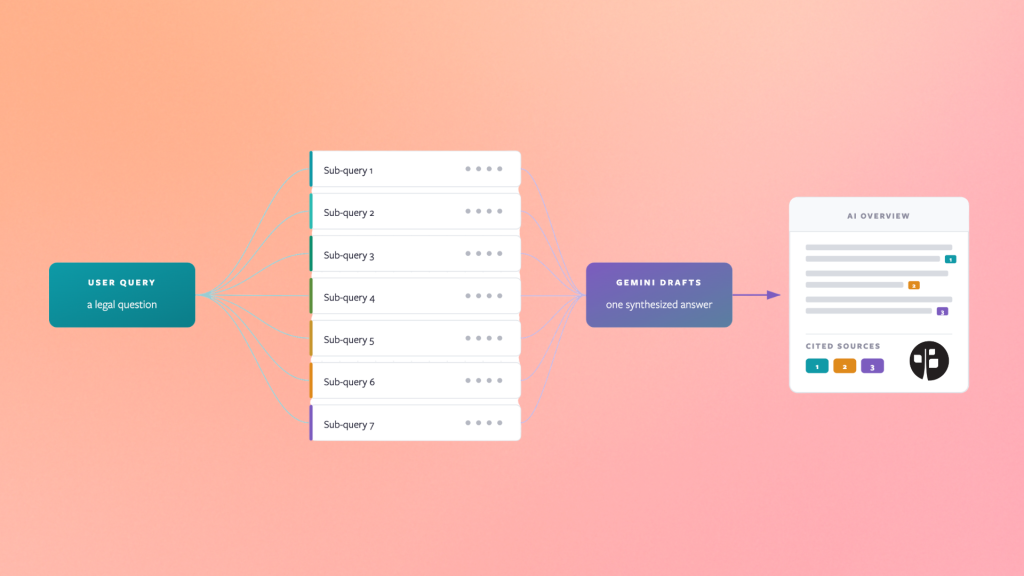
Here is the mechanical change underneath all of this which we talked about in April in our blog titled “AI Overview Ranking Signals vs. Google Search: One Search Box. Two Ranking Systems.” The old way, there was one list. Ten blue links. Your practice area page either beat the other firms’ pages for that one phrase or it did not. Ten slots, and you fought over one of them.
AI does not work that way. When somebody asks an AI a legal question, the model takes the question and quietly splits it into a stack of smaller ones. Ask it “what happens after a first DUI arrest in Texas,” and behind the scenes it is really running eight to twelve searches at once: first offense penalties, the court timeline, whether you can refuse the breathalyzer, what a lawyer costs, and so on. Google calls this query fan-out, and it is the engine running underneath AI Overviews.
Then it pulls candidate pages for every one of those sub-questions and piles them together. That pile is not ten pages. Our research has it routinely running past a hundred URLs for a single legal question. The model reads across all of them, writes its answer first, and only then decides which handful of pages it is actually going to name.
So no, you are not trying to be the best of ten anymore. You are trying to be the best of a hundred and then some. And the bar moved in a second way at the same time. The old system graded your page as a whole. The new one grades a single passage. It is hunting for the two or three cleanest sentences that answer one of those sub-questions, and it does not much care how good the rest of the page is.
That is the part that should get your attention. A firm you have never heard of, with a worse website than yours, can get named in the answer because one tight paragraph on their page nailed a sub-question yours danced around for four paragraphs before getting to the point – assuming all of their offsite qualifiers line up.
What actually wins with AI-first search? Authority.
None of this is complicated. Your website, your listings, your directory profiles, and whatever the rest of the internet says about you all need to tell the same story, and it needs to be current. Every claim has to hold up when something checks it. If your bio says board certified, the bar’s database had better say so too. If you focus on one kind of case, every profile had better say the same thing. You want a footprint that survives the second a machine decides to look you up.
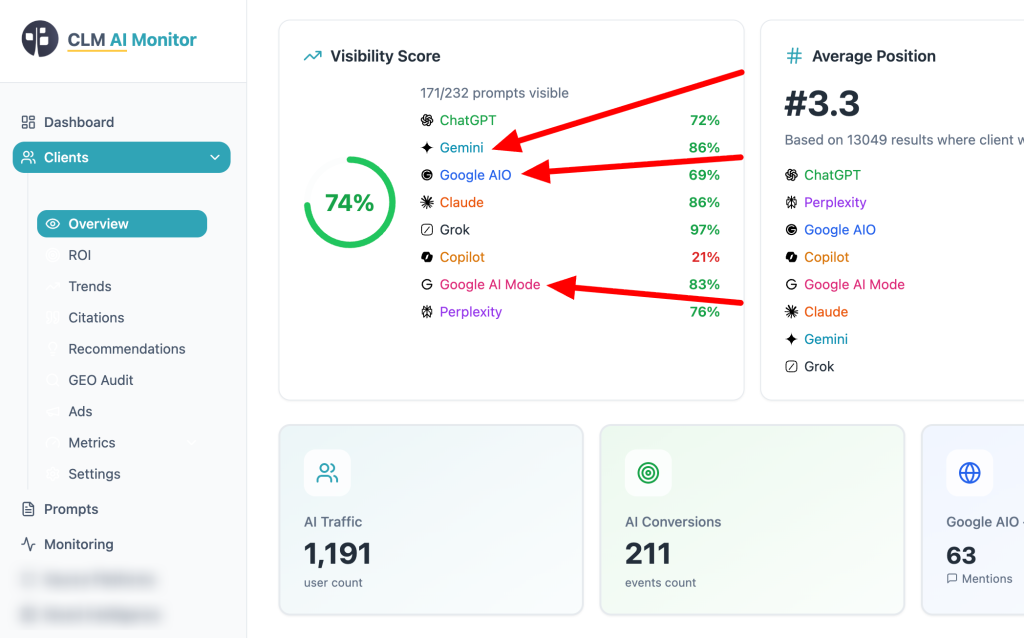
That is exactly what we’ve been building inside CLM Sequoia, our AI marketing platform for lawyers, and with the agents we run for our clients. The slice of winnable AI recommendations a firm grabs goes up every quarter as more of its pages move into the strong tier and more of those small sub-questions people ask become ones it can win. And we can measure all of it. We watch it happen.
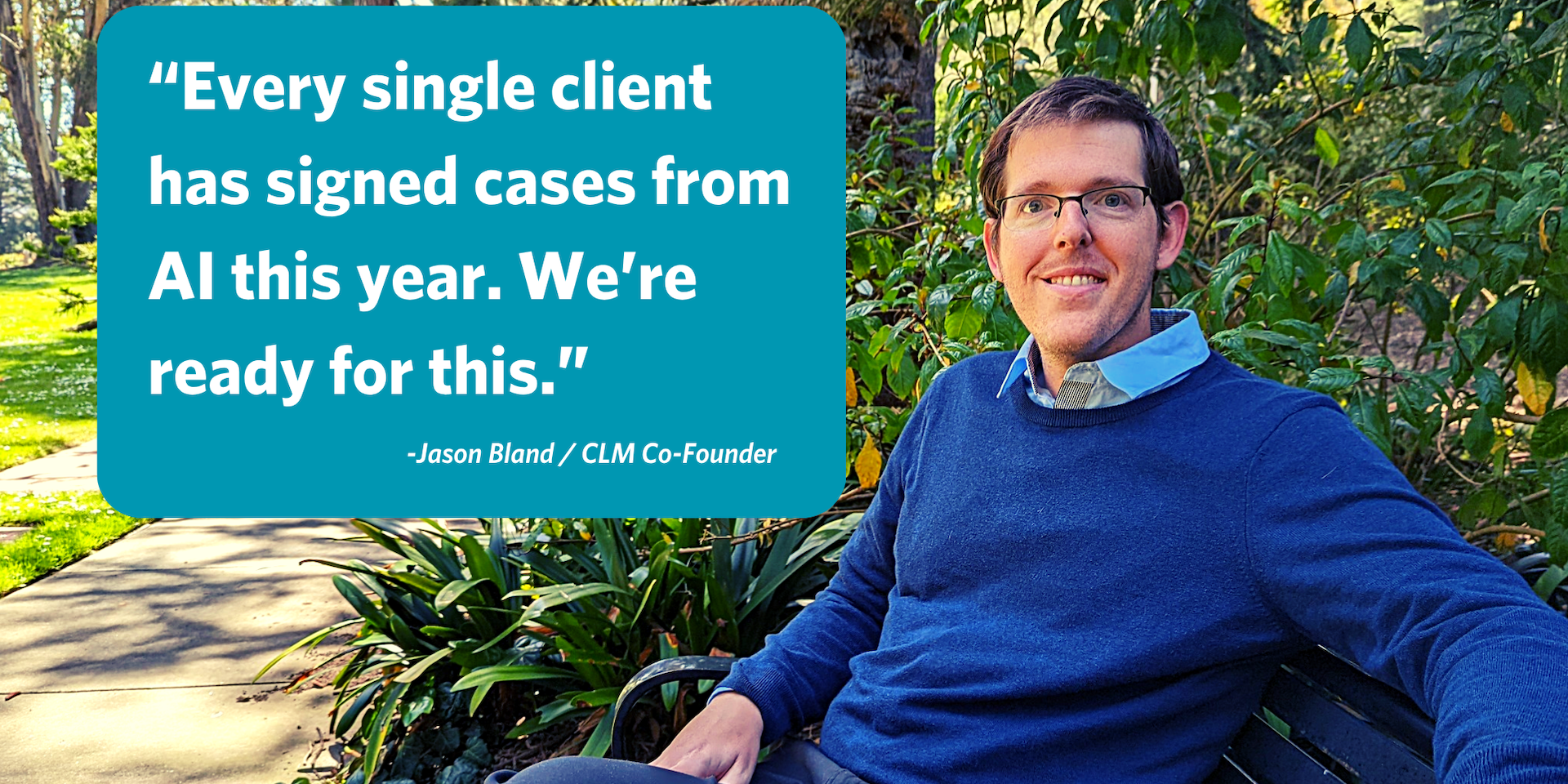
Every single client in our original test group for our answer engine optimization system has signed clients this year from ChatGPT, Google AIO, Claude, or Grok. Every single one. And those signups are accelerating.
A win for law firms. A loss for lead-generation services. What you should do now.
For over two decades, the firm that won search was not always the firm that was best at being a law firm or even a law firm. It was the firm that was best at SEO. You could be average in the courtroom and still own page one as long as your link profile was fat enough and your technical SEO was solid. Plenty of lead-gen outfits with no real lawyers on staff did exactly that, ranking circles around firms full of people who were actually good at the job.
What is happening now fixes it. The systems deciding who gets recommended are checking whether you are real, whether your information holds up, and whether you actually win. For once, the marketing rewards the thing that was supposed to matter the whole time. So if you are a lawyer reading this, here is where you start.
1. Make every mention of your firm say the same thing
This is the boring one but it’s so important. Your website, your Google Business Profile, every legal directory, every bar listing, your schema markup, all of it has to tell the identical story, and it has to be current. I talk to firms all the time with a gorgeous website and a Google profile still showing an address from two offices ago, or directory listings that call them a “general practice” when they have been employee rights-only for six years. Every one of those mismatches hands the AI a reason to go recommend somebody else. If your bio says board certified, the state bar database had better confirm it. Go pull up your own listings the way a machine would read them and fix every contradiction, then keep checking, because a profile that was accurate in January is not automatically accurate today.
2. Put your wins where machines can read them

These systems are trying to work out whether you are actually any good, and the most convincing evidence you can hand them is verifiable case results. Every meaningful verdict and settlement belongs on your website with the case type, the jurisdiction, and the date, and it belongs out in the world through press and legal news outlets. The press release itself is not what moves anything. What moves things is the independent, repeated, third-party coverage that grows out of it, the regional pickups and the syndication that leave a durable public record these models train on. On your website, a dedicated, regularly updated results page is one of the highest-value assets a firm can own right now, because it is the difference between claiming you win and proving it.
3. Show up in the directories that actually carry weight
The platforms that move AI recommendations are the peer-reviewed and outcome-based ones: Best Lawyers, Super Lawyers, and yes, still Martindale-Hubbell. Below those, your own documented case results, Chambers of Commerce, and Law360 coverage carry real weight. Avvo, your Google Business Profile, and Justia help round out the picture when there is real substance behind them. The thing to understand is that no single listing wins it for you. What these systems reward is convergence, the same firm showing up, described the same way, across all of those credible sources at once. And recency counts, so a 2026 Super Lawyers nod is worth more than a 2022 one the model has already filed under old news. If you want the full breakdown, we mapped out the legal directories that actually move AI recommendations tier by tier.
The treadmill of chasing algorithm updates and polishing vanity metrics is getting replaced by something that actually lines up with whether you are good at your job. If you have been doing right by your clients and you have the wins to show for it, this is the best thing that has happened to legal marketing in a decade.

Jason Bland
Jason Bland is a Co-Founder of Custom Legal Marketing. He focuses on strategies for law firms in highly competitive markets. He's a contributor on Forbes.com, is a member of the Forbes Agency Council and has been quoted in Inc. Magazine, Business Journals, Above the Law, and many other publications.

The Definitive Guide to Law Firm SEO That Works
Law Firm SEO That Works is where we show attorneys what their competitors wish they knew.