










Answer Engine Optimization Makes Trust More Valuable than Keywords
Jason Bland | December 17, 2025

The question is no longer "how do we rank for this keyword?" It's "how do we become the firm that AI systems trust to recommend?"
For decades, search engine optimization operated on a simple premise: rank for the right keywords, and clients will find you. Someone types “personal injury lawyer near me,” your website appears at the top, they click, they call, you win.
Keywords and Google rankings are still important but they’re not the future. And the replacement demands something else: actual, real-world trustworthiness.
The Shift From Search to Answers
When someone asks ChatGPT, Perplexity, or Google’s AI Overview for help finding a lawyer, they’re not getting a list of ten blue links to evaluate. They’re getting an answer. A synthesized recommendation that either mentions your firm or doesn’t.
This is Answer Engine Optimization, and it changes everything about how legal consumers discover attorneys.
In the old model, you could rank highly without being the best choice. Mediocre law firms that had a killer content strategy, an enviable link portfolio, and stronger technical SEO than their competitors could rise to the top. Even with Google’s E-E-A-T standards (Experience, Expertise, Authoritativeness, and Trustworthiness) Google’s algorithm could still reward optimization skills, not necessarily legal skills.
AI systems work differently. ChatGPT references live web data and highly structured content. Perplexity shows its sources when it answers questions. Google’s AI Overviews (which operates differently from Google’s standard search) pull from trusted, high-authority sources to deliver direct answers. None of them care about your meta descriptions. What they care about is whether you’re a trustworthy source and your information speaks to the end user.
Why Trust Becomes the Ranking Factor
Think about how AI models determine what information to include in their responses. They’re looking for clear signals of real-world performance, content from trustworthy and editorially reviewed sources, and recent activity that shows the firm is not dormant.
The same factors that would make a human trust you are now the factors that make AI systems trust you.
This is a fundamental inversion. SEO was about convincing an algorithm to show your page to humans who would then decide whether to trust you. AEO is about being trustworthy enough that AI systems recommend you in the first place. You can’t fake your way into an AI-generated answer the way you could game search rankings. The system is evaluating whether you actually are what you claim to be.
Building Trust Through Documented Wins
If trust is the new keyword, then proof of results is the new link building.
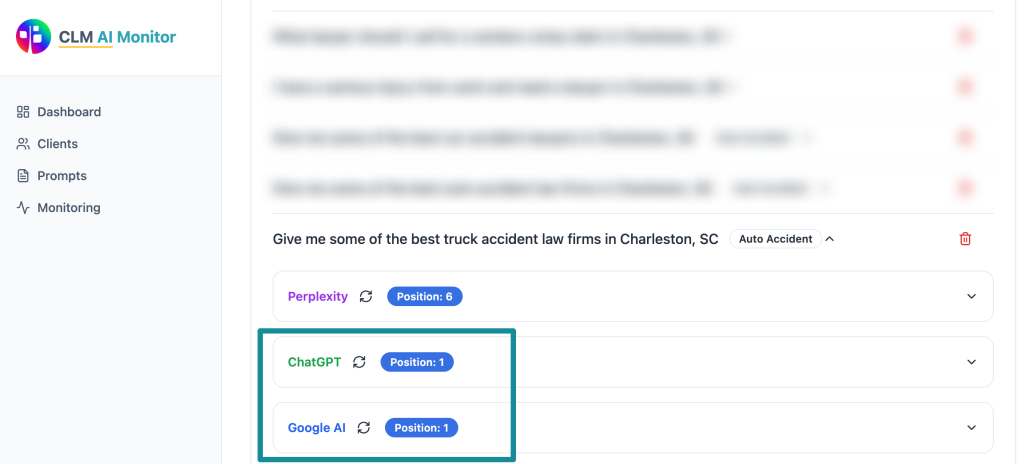
Consider what happens when someone asks ChatGPT “Who is the best truck accident lawyer in town?” The AI needs to synthesize an answer from available sources. Firms with a documented trail of outcomes give the AI exactly what it needs: fresh, credible evidence that the firm is actively winning cases.
This is where strategic press distribution becomes essential. When Steinberg Law Firm obtained $1,150,000 for a woman injured by a commercial truck on I-26, that announcement created exactly the kind of third-party, editorially controlled content that AI systems recognize as authoritative.
ChatGPT and Google AI (Gemini and Google AI overviews) took notice. The firm ranks at the top for many prompts related to truck accident recommendations on those chatbots. The position in Perplexity, while lower, went from “not found” to a 6th recommendation in less than one month after publishing the truck accident success press release.
The E-E-A-T Framework for AI Visibility
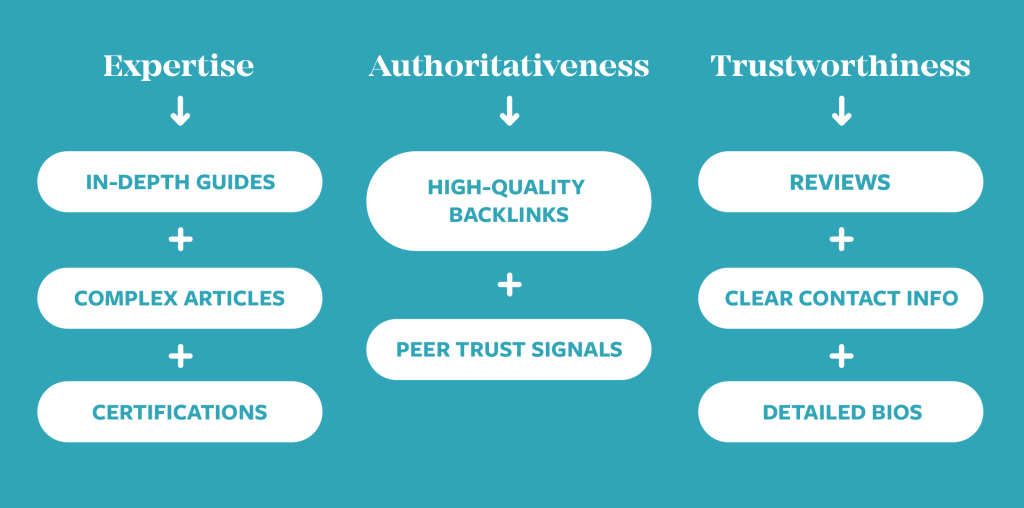
Google’s E-E-A-T framework (Experience, Expertise, Authoritativeness, and Trustworthiness) has evolved beyond traditional search guidelines. ChatGPT, Perplexity, and similar tools seek out reliable, original, and transparent information.
For law firms, this means attributing content to real attorneys with visible credentials, backing up statements with references to statutes and official sources, and building community presence through reviews and publications. It also means structuring content for AI discovery with direct answers to common legal questions, conversational headings, and schema markup that makes content easier for AI systems to parse.
The Uncomfortable Truth
AEO success requires actually being good at what you do and having proof of it. Marketing can amplify reputation, but it can’t manufacture it from nothing.
A Results page buried on your website helps, but AI systems place particular value on content that lives on third-party sites and follows journalistic standards. That’s why firms serious about AI visibility are announcing their wins through press releases and building consistent patterns of documented success.
This is ultimately healthy for the legal industry. A system that rewards genuine expertise over optimization gamesmanship should help great lawyers find great clients.
But it requires a different approach to marketing. The question is no longer “how do we rank for this keyword?” It’s “how do we become the firm that AI systems trust to recommend?”
That’s a harder question. And every day, CLM is answering it.

Jason Bland
Jason Bland is a Co-Founder of Custom Legal Marketing. He focuses on strategies for law firms in highly competitive markets. He's a contributor on Forbes.com, is a member of the Forbes Agency Council and has been quoted in Inc. Magazine, Business Journals, Above the Law, and many other publications.

The Definitive Guide to Law Firm SEO That Works
Law Firm SEO That Works is where we show attorneys what their competitors wish they knew.