











in Google
Google does not keep a neat list of ranking signals and their corresponding importance in determining search results. Its algorithm is constantly being updated and is increasingly using AI, so trying to understand each factor is both impractical and useless.
The real question is, what signals are relevant to your firm's website?
Important Ranking Signals for Law Firm Websites
In this section, we look at some of the ranking signals that Google is looking for to determine if your law firm’s website deserves to be the top ranking site for any given keyword.


GOOGLE RANKING SIGNALS
Ranking Signals Overview
Quality and Authority
Google assesses a law firm’s website quality and authority through various factors like topical relevance, user engagement, and technical authority. By focusing on specific legal topics, firms can improve their siteFocus Score, a measure of how well content aligns with their primary services. User behavior, traffic from Chrome users, and backlinks also influence authority. Additionally, Google evaluates content depth with a Needs Met rating and a metric called Page Quality (PQ). Success depends on balancing content quality, relevance, user engagement, and technical authority.
RankBrain
RankBrain, a machine learning component of Google’s algorithm, interprets user intent and helps match law firm websites to search queries. It values not just keywords but also how well the content addresses user needs. Firms that produce relevant, educational content will benefit from RankBrain’s ability to assess the value of their information based on user behavior and query fulfillment. This makes optimizing for user intent critical for legal websites.
E-E-A-T
E-E-A-T (Experience, Expertise, Authoritativeness, Trustworthiness) is crucial for law firm SEO, especially in YMYL (Your Money or Your Life) sectors. Experience can be demonstrated through real-world case examples, while expertise requires publishing in-depth, accurate legal content. Authoritativeness is boosted through recognition from reputable sources, and trustworthiness is established by transparency, client reviews, and factual, helpful advice.
SiteFocusScore and SiteRadius Summary
Google’s siteFocusScore evaluates how well a law firm’s website content stays focused on its core legal topics, while siteRadius measures how much the content deviates from these topics. Smaller firms with more focused content tend to outperform larger, generalist firms in local searches. To improve rankings, law firms should tighten their content strategy around specific legal services, ensuring a strong, relevant focus that aligns with their expertise and practice areas.
Quality and Authority
Google's approach to determining a law firm's website quality and authority has evolved significantly since Custom Legal Marketing was born in 2005. Quality and authority are now assessed through multiple layers, blending technical and content-related factors with how users interact with your content in the real world.
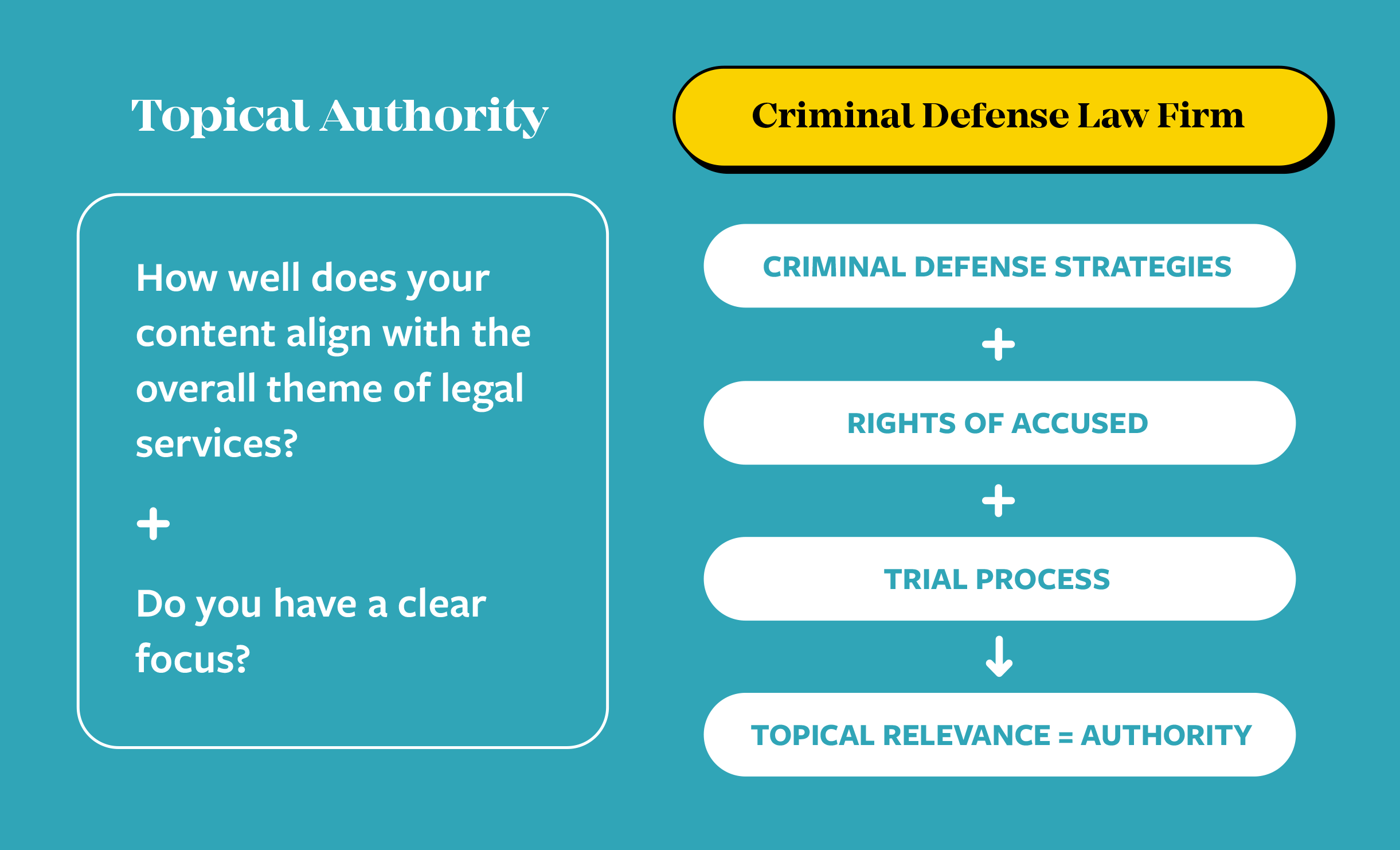
When assessing your law firm’s content, Google considers your topical authority, which means how well the content aligns with the overall theme of legal services. Sites that maintain focus on specific legal topics like personal injury or bankruptcy, while avoiding content that strays from these areas, build a stronger topical identity. This relevance helps them score higher in Google's SiteFocus and SiteRadius metrics. For instance, if a firm produces high-quality, in-depth articles about criminal defense strategies in New York, and the content consistently supports this niche, the firm is seen as more authoritative within that legal category.
Google now looks at different variations of authority signaling, including site-wide authority factors. This includes metrics like traffic from Chrome users and engagement rates. Yes, Google is looking at how people on Chrome use your website and making that part of their quality and and authority assessment. High-quality backlinks from trusted sources still play a role, but fresh, relevant links from newer content hold more weight than older links.
Additionally, user behavior is crucial. Google’s NavBoost, which tracks how users interact with a site via clicks and navigation, suggests that positive user engagement can improve rankings. A law firm website with easy-to-navigate pages, strong internal linking, and resources that users find helpful will likely see improved visibility.
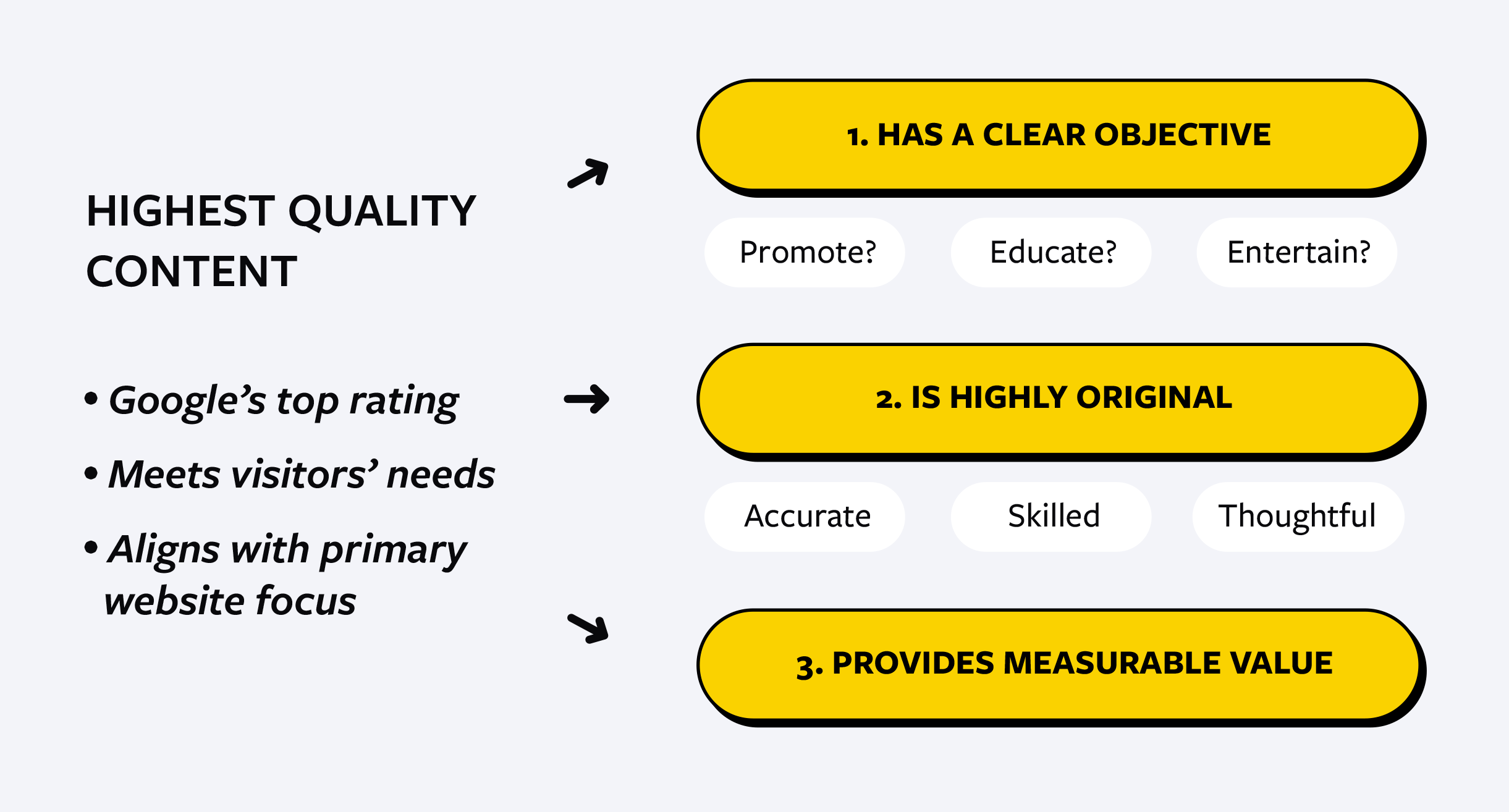
Google reportedly uses metrics like Page Quality (PQ) to assess the depth and effort behind the content. Law firms need to create articles, guides, and case studies that are not only informative but unique, visually engaging, and rich with multimedia. The more effort put into creating comprehensive content, the higher the website’s PQ score.
Your site's Quality and Authority is determined by more than content and links. It’s a mix of content quality, topical relevance, user engagement, and technical authority—all of which law firms must balance to improve their Google rankings.
RankBrain
How Google Serves Up Fresh Results
RankBrain, a key component of Google’s search algorithm, plays a significant role in determining how law firm websites rank in search results. We’ve been tracking RankBrain’s progress since 2015 As a machine learning system, RankBrain helps Google interpret complex search queries by focusing on user intent and understanding the relationships between words and phrases. For law firms, this can have a profound impact on visibility, especially when potential clients use varied or nuanced search terms.
For instance, if someone searches for “best DUI lawyer in NYC,” RankBrain considers not only the individual keywords but also the intent behind the query. It seeks to match users with the most relevant and authoritative content that satisfies their needs, even if the search terms are slightly different from what’s on your site. This means that law firms need to focus not just on exact-match keywords but also on creating content that addresses a broad spectrum of related topics and client concerns.
Law firms that produce in-depth, educational content about their practice areas, such as DUI defense or personal injury law, will likely benefit from RankBrain’s emphasis on topical relevance. It’s not just about using “lawyer” or “attorney” repeatedly—it’s about answering client questions, discussing case outcomes, or explaining legal processes in a way that shows your expertise. As RankBrain learns from user behavior—like the amount of time a visitor spends on your site or how often they return—it adjusts rankings based on how well your content seems to satisfy user needs.

RankBrain also helps Google handle ambiguous or long-tail queries, where the intent might not be immediately clear. For example, if someone searches “legal help after a car accident at night in Manhattan,” the system analyzes the relationships between the words to deliver the most relevant law firm pages. This highlights the importance of having diverse, yet focused, content that covers a range of client situations and legal services.
This means law firm SEO experts like Custom Legal Marketing or your firm’s internal marketing team must go beyond simple keyword optimization. By crafting content that deeply engages with user intent and demonstrates a strong understanding of legal issues, firms can align themselves with how RankBrain evaluates relevance and authority. Investing in a strategy that focuses on client questions, concerns, and scenarios will not only appeal to RankBrain but also improve the overall user experience… which, as we learned in Quality and Authority, is something Google uses to assess the value of your site.

If a sercher clicks on your result then does NOT go back to the results page, RankBrain may see your page as one that successfully answered the searcher's question, which is a positive signal.
E-E-A-T and Your Law Firm’s SEO
E-E-A-T (Experience, Expertise, Authoritativeness, Trustworthiness) is a framework for assessing the quality and trustworthiness of a law firm’s website in the eyes of Google. While not a direct ranking factor, these elements heavily influence how Google evaluates content, particularly for law firms operating in the "Your Money or Your Life" (YMYL) space, where trust is paramount. As a lawyer, you fall in the "Your Money or Your Life" category.
For law firms, E-E-A-T can be broken down as follows:
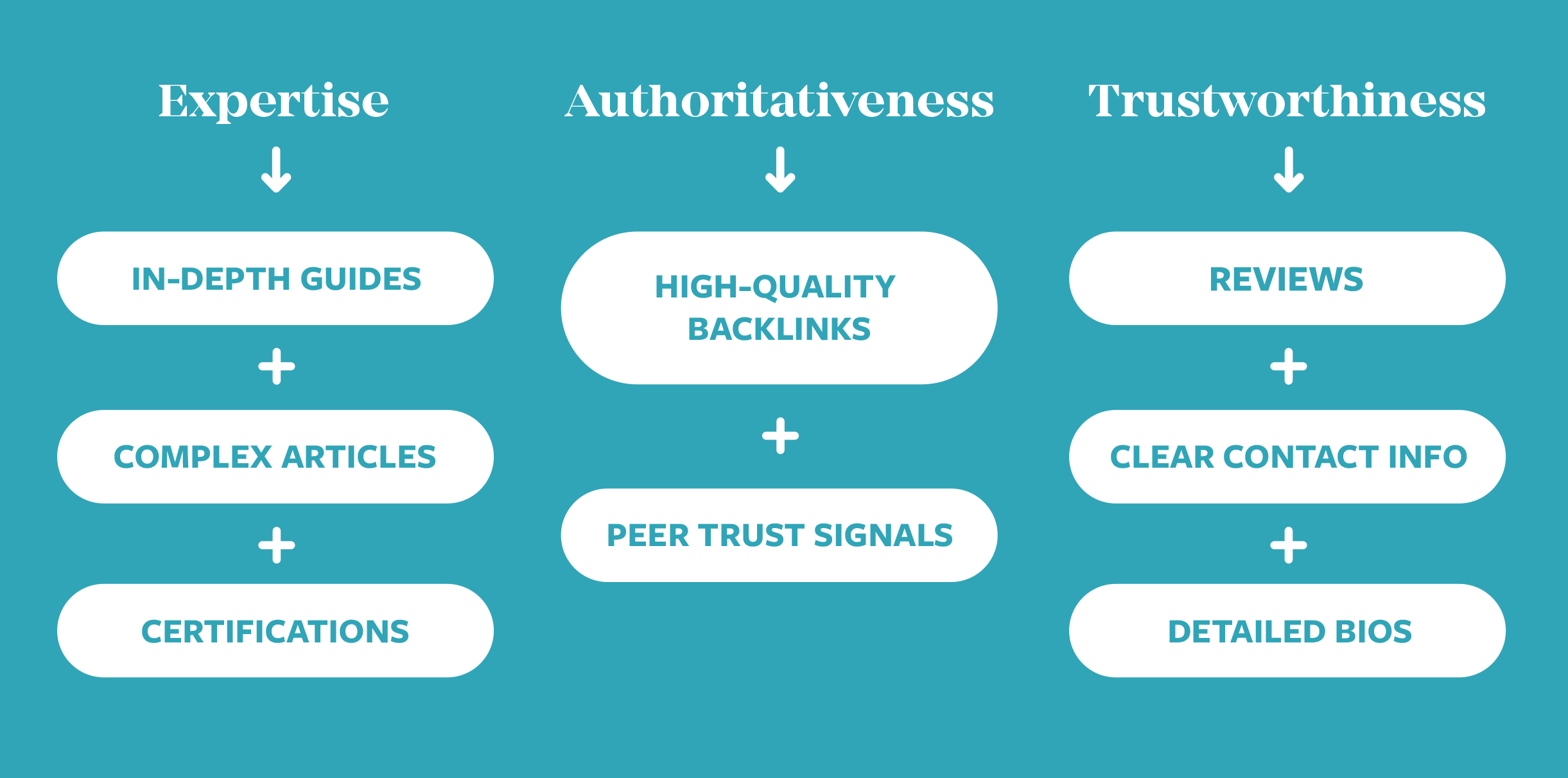
Expertise: Expertise is a measure of how knowledgeable and skilled the content creator or law firm is on the subject matter. For estate planning attorneys, this can be demonstrated by publishing in-depth guides, whitepapers, and articles on complex topics like wills, trusts, and inheritance laws. Regularly updating the site with changes in legislation or tax implications for estate planning shows that the law firm is up-to-date and authoritative. Having credentials, certifications, or years of experience prominently displayed also helps convey expertise.
Authoritativeness: Google assesses authoritativeness by looking at how others in the field regard the law firm. For law firms, obtaining high-quality backlinks from reputable legal journals, and news outlets can improve this metric. The more a firm is recognized by others in the industry as a thought leader, the stronger its authoritativeness in Google's eyes.
Trustworthiness: Trust is vital for law firms, especially when clients are making significant legal decisions, such as creating a will or managing a trust. Trustworthiness can be established through transparency, such as providing clear contact information, lawyer bios with credentials, and client reviews. For attorneys, ensuring that content is accurate, citing legal sources, and offering clear, helpful legal advice reinforces trust. Facts are incredibly important for a law firm’s “trustworthiness.”
SiteFocusScore & SiteRadius
Google’s leaked algorithm data sheds light on why large law firms often struggle to compete with local firms in search rankings. The reason the massive firms are often outranked by local law firms is because of siteFocusScore and siteRadius.
Local firms tend to have more focused websites with tightly connected content, which enhances their siteFocusScore—the measurement of how consistently content aligns with a central theme. In contrast, big law firms often cover a broader range of legal topics across a broader range of regions-sometimes including international regions, which dilutes their siteRadius, which refers to how far the content extends from the core topic. This revelation confirmed what many of our SEO specialists have suspected; Google prefers topical specialization.
For instance, a local firm that primarily focuses on estate planning will often outperform a larger, generalist law firm. Google’s siteFocusScore measures how well content sticks to its core theme—such as estate planning, wills, and probate law—and prioritizes firms that excel in these areas. siteRadius, on the other hand, evaluates how far a website extends its content beyond that focus. Law firms that write articles about unrelated legal areas or peripheral topics risk lowering their authority in Google’s eyes because their content appears scattered rather than authoritative.
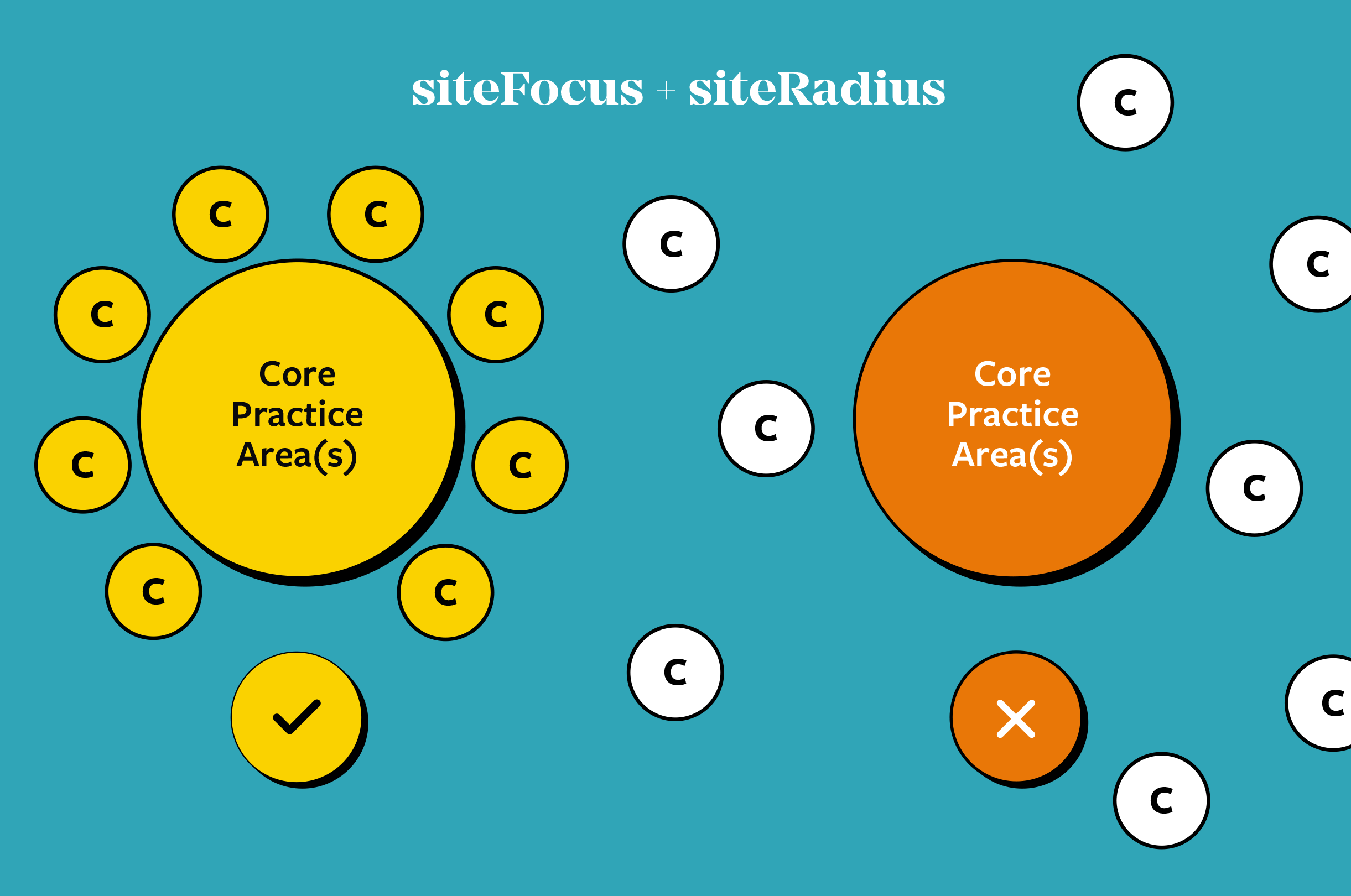
Big law firms, while having extensive resources, often publish content on many topics that aren’t directly related to their core practice areas, spreading their siteRadius too wide. For example, mixing estate planning content with unrelated topics like corporate law on the same site can weaken both the siteFocusScore and siteRadius, making it harder to compete in localized search results.
Improving your siteFocusScore comes down to producing content that is tightly aligned with the firm’s primary legal services and locations while minimizing unrelated material. A smaller radius is often better for firms with specific practices, allowing them to appear more authoritative on their main legal topics, such as estate planning, personal injury, or criminal defense.
Focus your content on what you do best and where you do it. That will give you a competitive edge over your national or international competitors.

CLM is singularly focused on my firm's success and frequently over-delivers. I don’t think that you could make a better choice.
- Paul Greenberg, Briskman Briskman & Greenberg
We have been using CLM for our websites for a number of years and they have been outstanding! Their entire team has always been highly responsive and met all of our marketing needs.
-Todd J. Leonard, Todd J. Leonard Law
