









Why ChatGPT’s Pricey Ads Might Make Sense for Law Firms
Jason Bland | January 28, 2026

At Custom Legal Marketing, we’ve been watching how traffic from ChatGPT behaves compared to organic Google traffic. Not hypothetically. Not in theory. In real analytics.
When I first saw reports that OpenAI was testing ad pricing around $60 per thousand impressions, my gut reaction was the same as most lawyers. That sounds expensive, especially when you consider that it’s close to NFL TV rates.
But based on what we’re seeing from our law firm ChatGPT optimization, these pricey views may actually be a great deal.
At Custom Legal Marketing, we’ve been watching how traffic from ChatGPT behaves compared to organic Google traffic. Not hypothetically. Not in theory. In real analytics. And what we’re seeing is ChatGPT and answer engine traffic converts at an insanely high rate for organic traffic.
Note: A conversion rate is the number of leads divided by the number of clicks. For example, 1 phone call to your firm for every 10 clicks would be a 10% conversion rate.
Table of Contents
In January of 2026, CLM’s Law Firms are Getting Great Conversion Rates from ChatGPT

rate from ChatGPT

rate from ChatGPT

rate from ChatGPT
Throughout 2025, our clients saw a rapid increase in visitors from ChatGPT, Perplexity, and Gemini. Those visitors not only showed strong engagement with our clients’ content. They also delivered remarkable conversion rates.
- New York criminal defense lawyer, Brill Legal Group, is seeing a 14% conversion rate from ChatGPT traffic.
- Michigan personal injury and medical malpractice law firm, Sommers Schwartz PC is seeing a 19% conversion rate from ChatGPT traffic.
- Lemon law and buyback law firm, Wirtz Law has a ChatGPT conversion rate of 65%.
Is $60 Worth it for the “Perfect” Client?
When we talk to our clients and their intake teams about lead quality, many of them tell us that the lead quality is great! During a recent follow-up meeting with Atlanta estate planning attorney, Jake Slowik of Slowik Estate Planning, he reported to our law firm SEO team that one of his ChatGPT leads in December represented the perfect profile of what he looks for in a client.
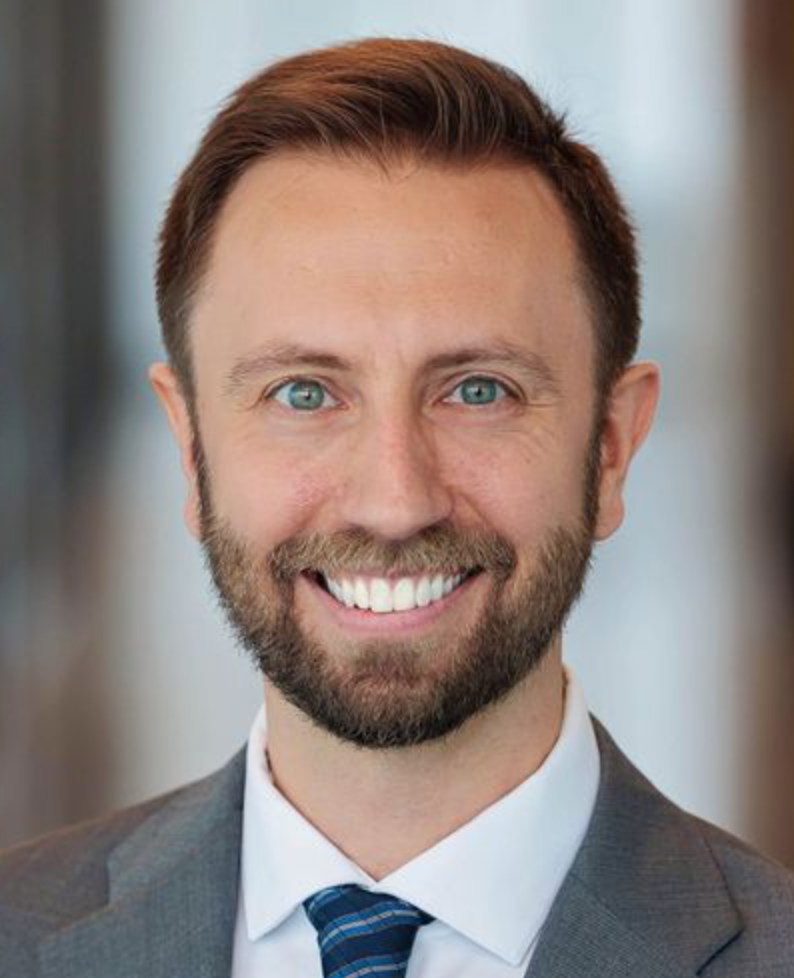
And that’s probably because ChatGPT qualified the lead before even recommending Slowik Estate Planning.
ChatGPT is Sometimes Qualifying Your Leads
In most ChatGPT sessions, users do not open with “Who should I hire for my personal injury lawyer?” or something with traditional keywords. They start by trying to understand their situation. They ask if they have a case. They ask what the law says. They ask what mistakes to avoid. They ask what timelines look like. They ask what compensation might be possible.
Only after they’ve worked through those questions do they ask for a lawyer.
By the time the recommendation question appears, ChatGPT has already helped the user frame their problem. It has already narrowed the practice area. It has often narrowed the jurisdiction. In many cases, it has also filtered out people who do not have viable claims.
That means the recommendation is happening after qualification.
Compare that to a Google search. Many legal searches are exploratory. Someone might search “do I have a medical malpractice case” or “how long do I have to sue a doctor.” Those searches are early-stage. The user is still unsure if they even need a lawyer.
With ChatGPT, that uncertainty often gets resolved before the recommendation is requested.
For example, a user may start by asking, “My mother had complications after surgery, is that malpractice?” ChatGPT explains the difference between bad outcomes and negligence. The user follows up with details about the hospital, the timeline, and the injury. ChatGPT explains statutes of limitation and the need for expert review. Only then does the user ask, “Should I talk to a medical malpractice lawyer?”
That question is not casual. It comes after education, filtering, and emotional processing.
That is why traffic from ChatGPT tends to convert so well. The user does not arrive confused. They arrive ready.
That is the context critics are missing when they focus only on CPM.
How ChatGPT Ad Conversion Rates May Compare to PPC Conversion Rates

I want to ground this in something concrete. Here’s an example from a personal injury PPC campaign we manage. Over a short window, the campaign generated 8,281 impressions. Those impressions led to 355 clicks. Those clicks produced 86 conversions.
That’s a 24 percent conversion rate from click to lead. More importantly, it’s roughly a one percent conversion rate from impression to lead. That works out to about 10 leads per one thousand impressions.
Now apply that same math to ChatGPT ads.
If OpenAI charges sixty dollars for one thousand impressions, and those impressions convert at roughly the same rate as a strong PPC campaign, you’re looking at about ten leads for sixty dollars.
That’s a $6 cost per lead. If I were to deliver qualified leads to a personal injury law firm for six bucks, they’d probably fly me out to their office on a private jet to celebrate.
Of course, that math depends on whether or not ChatGPT ad impressions can be delivered with the same level of relevance and intent as an “organic” recommendation and as hundreds of law firms in a market try to be seen for the same intent, you’ll likely be paying more than $60.
Don’t Get Too Excited. Lawyers Haven’t Been Invited to ChatGPT Ads…Yet
Now that we’ve talked about how great ChatGPT ads might be, here’s the unfortunate truth. Lawyers aren’t invited. I reached out to OpenAI and Danne at ChatGPT gave me this predictably vague answer:
“I appreciate your thoughtful question regarding ChatGPT ads and the eligibility of legal services. At this time, we’re unable to provide specific details on which industries or categories are included or excluded from ChatGPT ad placements beyond what is outlined in our Help Center.”
At the moment, travel and retail seem to be the starting point for ChatGPT ads. They’ve also said that ads won’t appear on sensitive conversations and singled out medical-related sessions. Whether they classify injuries from the legal standpoint as medical, we don’t know.
But since OpenAI’s CEO, Sam Altman has publicly complained about the “eye-watering” computing costs and the company is facing over $143 billion in losses before even dreaming of turning a profit, it’s safe to assume that they will eventually want a piece of the $3 billion/year attorney advertising market.
And when that happens, the seemingly high price may actually be a bargain.
Even if Lawyers Aren’t Invited to Ads (yet), You Can Still Get Qualified Leads from ChatGPT
Our law firms are already getting qualified leads from ChatGPT without spending a dollar on ads. We see it every week in analytics, intake logs, and call recordings.
Those leads are not accidents. They’re getting leads because Custom Legal Marketing has built a durable public footprint that ChatGPT already understands and trusts. When users ask real questions and move toward hiring a lawyer, those firms surface because the data supports it.
We make sure your case wins are visible, your practice areas are clearly reinforced, and your firm shows up consistently across the sources large language models rely on.
If you want to be recommended by ChatGPT, you don’t start with ads. You start by becoming the obvious answer.
Schedule a free consultation with one of our team members today!

Jason Bland
Jason Bland is a Co-Founder of Custom Legal Marketing. He focuses on strategies for law firms in highly competitive markets. He's a contributor on Forbes.com, is a member of the Forbes Agency Council and has been quoted in Inc. Magazine, Business Journals, Above the Law, and many other publications.

The Definitive Guide to Law Firm SEO That Works
Law Firm SEO That Works is where we show attorneys what their competitors wish they knew.

