












Law Firm
Editorial links have become one of the most crucial tools for law firms seeking to rise to the top of organic search results, establish trust, and gain recognition from AI platforms. These links are powerful because they represent organic votes of confidence from reputable sources.
Editorial links help new clients find and trust you.
How Genuine Mentions Build Authority Online


LAWYER DIRECTORIES
How Lawyers Can Get Quoted in the Media
For some attorneys, media exposure feels like something reserved for celebrity lawyers or firms with a national footprint. In reality, reporters and editors are always looking for expert voices, and lawyers are uniquely positioned to provide the kind of authority, credibility, and perspective that makes a story compelling. Getting quoted in the media comes down to building habits, telling the right stories, and making yourself a reliable and accessible resource.
This article outlines practical steps that any lawyer or law firm can take to start securing media mentions and establishing a reputation as a go-to expert.
Why Media Quotes Matter
Advertising has its place, but nothing carries the same weight as earned media. A television interview, a quote in the New York Times, or even a mention in your local business journal can do more to establish credibility than a year’s worth of banner ads.
Why media quotes are powerful:
- Third-party validation builds trust. Readers believe journalists have vetted you.
- Quotability creates authority. When your perspective appears in a news piece, it signals that you are someone worth listening to.
- SEO benefits follow. Many news outlets publish online, and those links can drive long-term search visibility.
Being quoted works like an endorsement from the press, one that continues to influence potential clients long after the story runs.

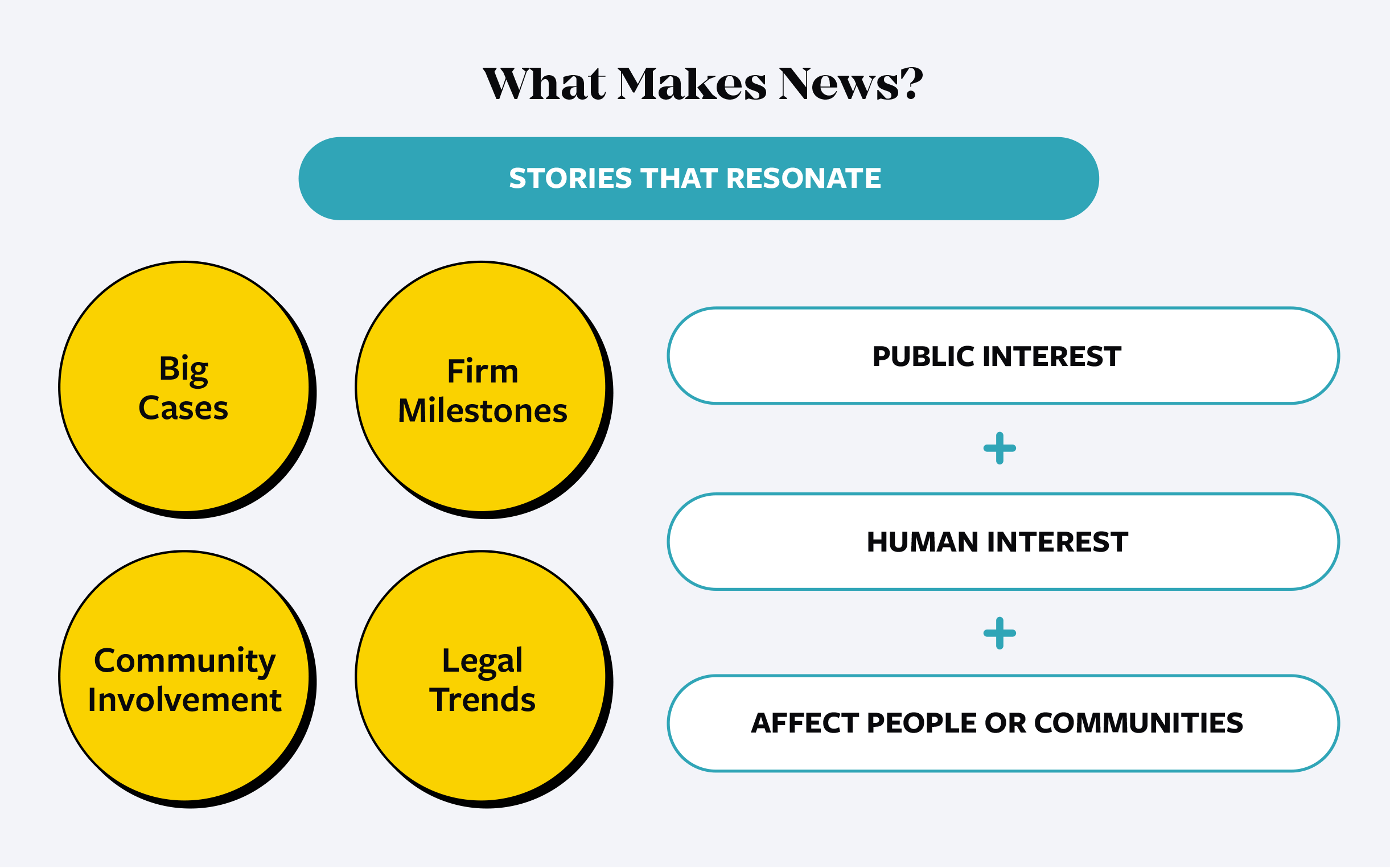
Step 1: Understand What Makes News
Before you can get quoted, you need to know what the media cares about. Not every case, verdict, or announcement is headline-worthy. Start by asking the most important question in public relations: “Who cares?”
For lawyers, stories that tend to resonate fall into a few categories:
- Big cases. Lawsuits involving notable defendants, large numbers of plaintiffs, or issues of public interest such as consumer rights, corporate misconduct, or government accountability.
- Firm milestones. Opening a new office, hiring a new partner, or celebrating a significant win can attract attention from local business outlets.
- Community involvement. Sponsorships, volunteering, or civic projects often create a human-interest angle.
- Legal trends. Identifying a pattern in your area of practice, such as a rise in rideshare accident cases, may interest journalists looking for trend pieces.
The key is to frame your news in terms of who is affected. A lawsuit is not just a filing, it is a story about workers, consumers, or communities.
Step 2: Draft Pitches Journalists Will Read
Once you have identified a story, you need to capture a journalist’s attention. Your pitch does not need to be elaborate. In fact, simple is best.
- Keep it brief. Journalists receive hundreds of emails each day, so one short paragraph with a strong hook is better than a long essay.
- Lead with the drama. Put the most shocking or impactful element first. A subject line such as “Security guards forced to racially profile Black customers” tells a story immediately.
- Provide supporting facts. Case numbers, plaintiff details, and filing dates signal that the story is real and verifiable.
Your pitch should feel like an invitation. You are not writing the article, only showing the journalist where the story is.
Step 3: Get Comfortable With Cold Outreach
Many lawyers hesitate to pitch reporters because they do not know anyone in the newsroom. Connections can help, but they are not required. Journalists are always looking for fresh sources, and a well-timed cold pitch often works.
Where to send pitches:
- Newsroom tip lines. Most publications have a general “tips” email.
- Reporter emails. If you read an article related to your practice, reach out directly to the writer.
- Media databases. There are tools to help find reporters covering your area, though they are not essential for success.
Journalists need credible voices, and your expertise solves their problem.
Step 4: Follow the Rules of Engagement
Landing a response from a journalist is only the beginning. Once they show interest, you need to handle the process carefully.
- Be prompt. Reporters work on strict deadlines. A same-day reply can make or break your opportunity.
- Be flexible. If they prefer to speak early in the morning or during lunch, make the necessary adjustments.
- Be prepared. Have talking points ready so you can communicate clearly.
- Be factual. Send written summaries or fact sheets after the interview to minimize errors.
Always remember that the journalist controls the final version of the story. Your role is to provide accurate and useful information.

Step 5: Use Digital Press Releases Strategically
Digital press releases are often overlooked, but they remain one of the best tools for law firms. A release will not guarantee front-page placement, but it does put your news in front of an audience that matters.
A well-crafted release can:
- Announce major wins or lawsuits.
- Highlight achievements such as awards or speaking engagements.
- Provide material for “as featured in” logos on your website.
- Help prospective clients who are researching your firm.
- Attract interest from traditional media.
Press releases are especially useful when advertising is restricted. For example, if your firm is investigating a doctor accused of misconduct, you may not be able to run ads. A press release ensures your firm appears alongside breaking news coverage.
Step 6: Become a Resource for Reporters
The best way to be consistently quoted is to establish yourself as a reliable resource. Instead of only pitching your own stories, make yourself available when journalists need expert insight.
Platforms such as Terkel or Help a Reporter Out (HARO) connect journalists with sources. Lawyers who respond to these inquiries often land recurring opportunities.
To succeed:
- Set aside time each week to review posted questions.
- Write original and thoughtful responses, rather than canned replies.
- Be open to topics beyond the law, including business, hiring, or leadership.
When you provide consistent value, reporters begin to view you as someone they can count on.

Step 7: Announce Everything
Consistency builds visibility. Do not wait for a blockbuster case or national headline to share your news. Announce everything, from office moves and sponsorships to community service and speaking engagements.
These smaller announcements:
- Keep your firm visible in search results.
- Provide multiple hooks for future stories.
- Build a digital footprint of credibility.
The more you announce, the easier it becomes for journalists to discover you.
Step 8: Think Long-Term
Media exposure grows with time. A single quote can lead to more opportunities, a local mention may be picked up nationally, and one successful press release often leads to lasting relationships with journalists.
By committing to a long-term approach, you create a snowball effect. Each effort adds momentum, and over time, your name becomes familiar to both reporters and potential clients.
Securing a media quote is a realistic goal for any lawyer. By identifying stories that matter, crafting concise pitches, responding promptly to journalists, and utilizing tools such as digital press releases and expert networks, you can create consistent opportunities for visibility.
Every quote adds to your credibility. Each mention expands your reach. With steady effort, you position yourself as a trusted authority, and in the legal profession, trust is the foundation of success.

CLM is singularly focused on my firm's success and frequently over-delivers. I don’t think that you could make a better choice.
- Paul Greenberg, Briskman Briskman & Greenberg
We have been using CLM for our websites for a number of years and they have been outstanding! Their entire team has always been highly responsive and met all of our marketing needs.
-Todd J. Leonard, Todd J. Leonard Law
