











For Law Firm Websites
Your website's content has to speak to real humans, search engines, and AI-powered answer engines. Firms that create clear, authoritative content while prioritizing the user’s needs are more likely to be cited and recommended.
Get found, make the right first impression and get more leads.
Written Content that Fuels Growth Across Search and AI


WRITTEN CONTENT FOR LAWYERS
This guide examines five key areas where law firms can use written content to enhance their online presence, foster trust, and cultivate genuine client engagement.
Practice Area Pages: Your Foundation for Expertise
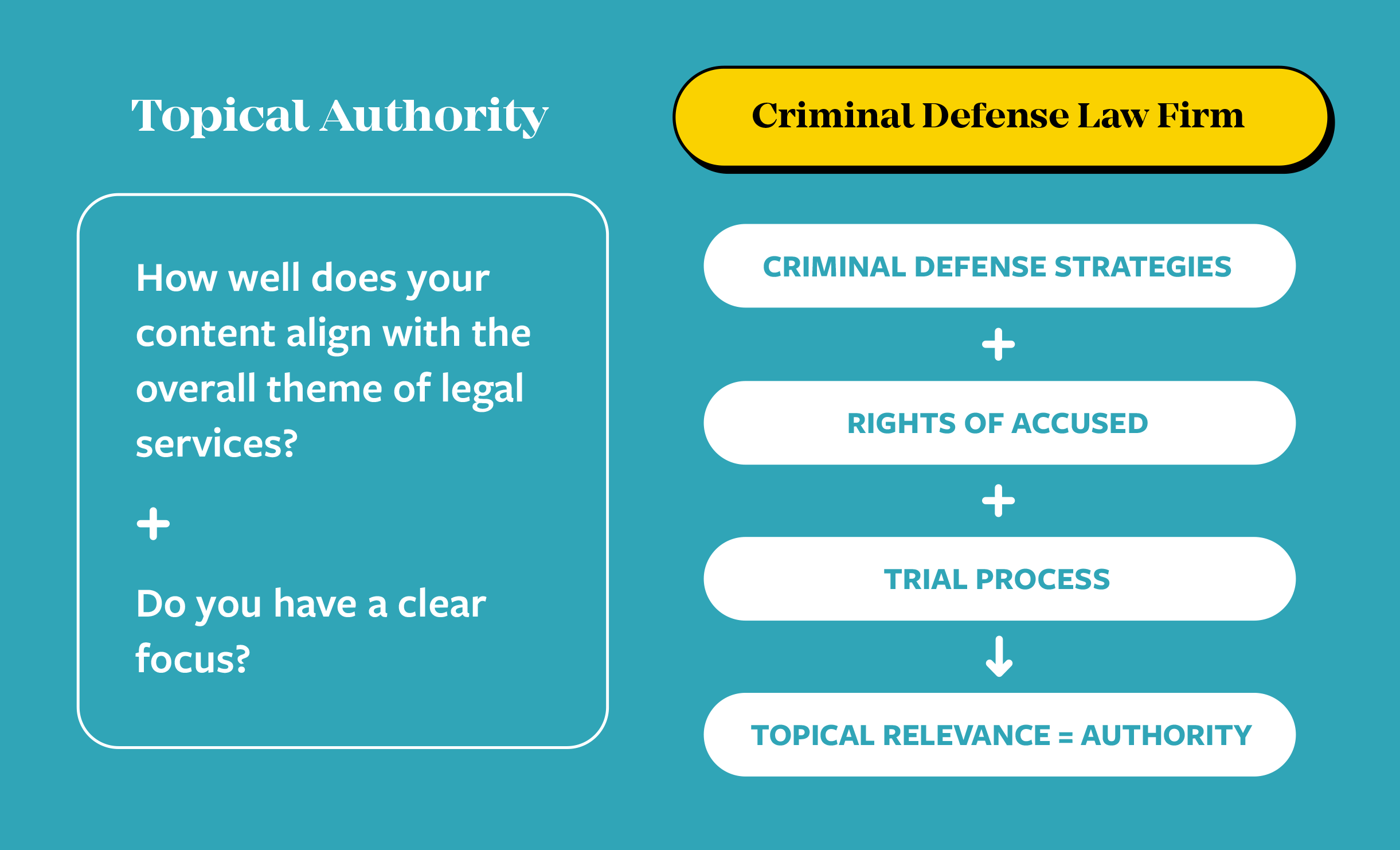
Practice area pages are the backbone of a law firm’s web presence. They do much more than tell visitors you “handle personal injury” or “offer estate planning.” Done right, they serve as the cornerstone of topical authority for both search engines and AI bots.
Each practice area page should be developed as a complete educational resource. Go beyond a high-level overview and offer in-depth explanations. What laws apply in your jurisdiction? What are the common challenges clients looking for a lawyer in this practice area face? Use real-world language to break down processes, explain timelines, and define unfamiliar terms.

AI-driven engines prioritize content that addresses specific search intent and anticipates related questions. For example, a personal injury page shouldn’t just explain negligence; it should answer, “How long do I have to file a claim in [state]?” or “What damages are recoverable in a typical case?” Structuring your content to lead with direct answers increases the odds of being featured in AI snapshots or voice search results.
Don’t forget the importance of page formatting. Use easily identifiable headings, bullet points, and summary tables where appropriate, so users and search algorithms can quickly find what they need. And always highlight your unique credentials, case outcomes, and attorney bios. This not only supports E-E-A-T (Experience, Expertise, Authoritativeness, Trustworthiness) best practices, but it also enables AI models to cite you as a source with greater confidence.
Content Pillars and Clusters: Establishing Thematic Authority
Content pillars are comprehensive guides built around your core practice areas, supporting your law firm SEO by signaling depth and credibility to both search engines and AI. A pillar page anchors a tightly interlinked cluster of related material, from frequently asked questions to in-depth blogs.
Let’s say you specialize in employment law. Your pillar page could be titled “The Complete Guide to Wrongful Termination in [State],” breaking the topic down into subpages or sections, such as “Gathering Evidence for Wrongful Termination,” “State-Specific Employee Protections,” and “How to Prepare for Mediation.” Each supporting article should link back to the pillar, and the pillar should summarize and interconnect all related subtopics.

This approach is beneficial for visitors who want to explore the topic in depth and helps signal to AI engines that your site is the most authoritative resource to reference when answering nuanced or follow-up questions. Content pillars also encourage longer website visits, send positive user engagement signals, and make it easier for bots to parse and extract answers for conversational search queries.
Regularly update your pillar pages with new insights, changes in law, or notable case results. This shows that your firm is active, responsive, and attentive to developments, all attributes that improve your standing in both traditional rankings and AI-generated overviews.
FAQs: Anticipating and Answering Every Question
The FAQ format is uniquely valuable for law firm marketing. Legal topics generate endless follow-up questions. Sometimes these questions are so specific that they never make it to a dedicated page, but are still valuable content. By collecting and directly answering these questions, you make it easier for clients to get the clarity they need and for AI engines to surface your expertise in response to a wide variety of queries.
Start by reviewing the actual questions your intake team receives, the People Also Ask sections on Google, and autocomplete suggestions. Organize your FAQs by subtopic and use conversational, plainspoken answers. For example, instead of simply stating, “Yes, you can sue for breach of contract,” walk users through the basic criteria and what they might need to document before calling your firm.

Diversify your FAQ content with both legal topics and procedural information. For example, cover costs, timelines, and what to expect during each stage of the process, whether it be a personal injury lawsuit or child custody case. When your FAQs are robust and well-researched, your website is more likely to be cited by generative AI models as a trusted source.
Additionally, FAQs can be a prime location for showcasing your firm’s personality and client-first approach. Offer real-life scenarios or clarify misconceptions. This helps humanize your brand and reassures potential clients that you care about their concerns, not just their cases.
Blogging: Demonstrating Knowledge and Staying Relevant
Your firm’s blog can be a dynamic platform for showcasing topical knowledge, commentary on legal news, and practical advice. Well-written blog posts help you seize upon long-tail keywords, address trending legal questions, and inject your firm’s unique voice into ongoing conversations.
For law firm SEO and legal marketing, blog content should be original and reflect your law firm's personality. Rather than simply summarizing the latest court decision, offer your analysis. What are the practical implications for clients? How might the law change in the next legislative session?
Generative AI tools like ChatGPT, Claude, and Perplexity tend to reference sources that directly answer specific, timely questions.
Create content that reacts to new developments and explains what those developments could mean for clients. Or, dissect complex issues in easy-to-understand terms. Use media such as charts, timelines, and case summaries to break up text and make your insights more memorable and shareable.
Importantly, every blog post should include author information, relevant credentials, and links to foundational pillar pages. This builds internal coherence and signals to both users and algorithms that real, qualified attorneys run your site. Remember to interlink related posts, update old articles with new insights, and consider multimedia elements like short videos or infographics. This level of engagement makes it more likely that AI engines and human users will see your firm as the go-to resource in your niche.
Thought Leadership: Building Trust and Earning Citations
Thought leadership content sets your law firm apart as a true authority in your practice areas. This isn’t about selling your services directly; it’s about adding to the legal discourse, whether through white papers, case studies, opinion pieces, or in-depth guides.
Well-executed thought leadership demonstrates both experience and expertise, establishing credibility for both users and AI search engines. For example, publishing a downloadable guide on “Emerging Trends in Data Privacy Litigation” or an analysis of “Supreme Court Impacts on Workers’ Rights” underscores your firm’s analytical depth. Cite reputable sources, use original research where possible, and invite peer commentary to foster high-quality backlinks and references.
For AI-driven platforms, the most cited sources are often those that blend data, expert opinion, and clear, actionable guidance. Make your thought leadership pieces easily accessible by using a logical structure and navigation, and update them regularly. Encourage other attorneys at your firm to publish under their own names to build a multi-dimensional online presence.
By consistently producing thought leadership content, your firm will earn more mentions, citations, and direct links from other websites, journalists, and even AI chatbots looking for trusted answers.
Contact Us
Clear, comprehensive written content is critical for law firm marketing in the search and AI-driven world. By investing in high-quality practice area pages, well-developed content pillars, robust FAQs, ongoing blogging, and impactful thought leadership, your firm will be well-positioned to build trust, attract the right clients, and remain at the forefront of both human and AI-powered search.

CLM is singularly focused on my firm's success and frequently over-delivers. I don’t think that you could make a better choice.
- Paul Greenberg, Briskman Briskman & Greenberg
We have been using CLM for our websites for a number of years and they have been outstanding! Their entire team has always been highly responsive and met all of our marketing needs.
-Todd J. Leonard, Todd J. Leonard Law
