












for Lawers
Google Web Stories are visually rich, mobile-first pieces of content that appear as tappable slides. Think of them as attention-grabbing ways to tell your law firm’s story or answer common client questions in a format optimized for today’s mobile users.
An engaging way for your firm to break down complex issues.
Using Google Web Stories for Law Firm SEO


GOOGLE WEB STORIES
What Are Google Web Stories and Why Should Law Firms Care?
Google Web Stories provide a unique opportunity for law firms to showcase expertise, break down complex legal topics, highlight victories, or address FAQs, all while engaging potential clients in a format they want to consume. Legal marketing today isn’t limited to blog posts and static website pages. Users, especially those searching for attorneys, want quick answers, real stories, and proof of your authority. Web Stories give law firms a flexible tool to do just that, while also helping you show up in richer, more varied search results.
But the influence of Web Stories is not limited to Google. As major AI search engines like ChatGPT, Perplexity, and Claude index public web content and favor direct, multimedia answers, publishing Web Stories gives your law firm even more ways to become a cited authority in conversational search.
Strategic Benefits: How Google Web Stories Boost Law Firm SEO and Legal Marketing
Wider Visibility Across Devices and Search Platforms:
Web Stories get displayed not just on Google search results pages but also on Discover and Images, and they are increasingly surfaced by AI-powered chatbots when users ask legal questions. This means your law firm can reach potential clients whether they’re searching on their phones, browsing news feeds, or asking voice assistants for legal guidance.
Faster Answers, Higher Engagement:
People often want quick, digestible legal information before they make a decision. Web Stories let you cover topics like “What should I do after a car accident in California?” or “How is child custody decided in Texas?” in concise, visual slides. This format keeps users engaged for longer and provides you with more opportunities to build trust.
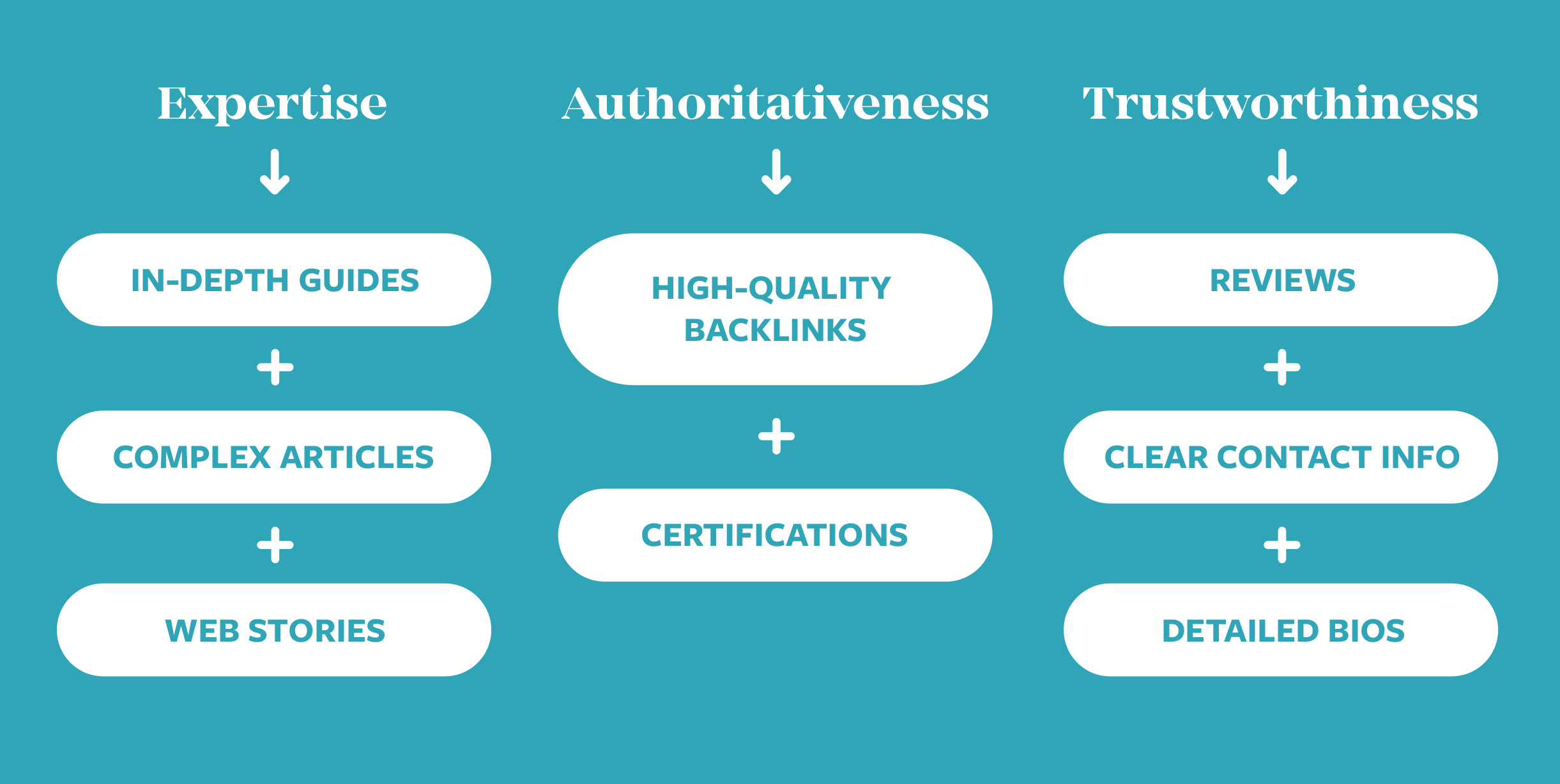
Strengthened E-E-A-T Signals:
Expertise, experience, authority, and trustworthiness are essential for a law firm's SEO. Web Stories enable you to reinforce these signals by embedding citations, linking to your longer articles, showcasing attorney credentials, and even integrating client testimonials directly into your content. AI systems are increasingly using these references to determine who gets cited in answer snapshots and voice search results.
Content Diversification for AI-Driven Search:
Chatbots and AI search engines are trained to surface not just plain text, but also multimedia answers. By producing Web Stories, your law firm provides AI with structured, rich content it can parse, cite, and recommend, especially when answering multi-turn, conversational queries.
Creating Compelling Web Stories That Stand Out in Legal Marketing
For law firm marketing success, creating Web Stories is only half the equation. Here’s how you can maximize impact:
Every Web Story should be built around the real questions and concerns your prospective clients have. Use data from Google Search Console, People Also Ask, and AI search queries from platforms like Perplexity to identify the most pressing legal topics. Example themes include “Steps after a workplace injury,” “When to call a lawyer for a DUI,” or “What to expect during a divorce consultation.” Use direct Q&A formats when possible; for example, “How much does a personal injury lawyer cost?” followed by a concise, authoritative summary and a clear call to action or next steps.
Interactive elements, such as quiz slides (“Is my accident eligible for a claim?”) or clickable links to more in-depth guides, keep users engaged and encourage them to learn more. Add captioning and alt text for accessibility, making your stories more usable for everyone and increasing the likelihood that algorithms will recognize and surface your content.
Technical Essentials: Ensuring Your Web Stories Perform Well Everywhere
Use Schema Markup and Structured Data:
Applying the right schema markup to your stories is critical. This helps Google and AI bots understand what your content is about, extract answers for conversational search, and feature your law firm in snippets, carousels, and AI Overviews. Include Attorney or LocalBusiness schema for firm branding.
Optimize Load Speed:
Web Stories are predominantly consumed on mobile devices. Ensure your stories load quickly, use appropriately sized images, and are easy to tap through on a phone. Fast and smooth experiences keep users engaged, reducing bounce rates and serving as positive ranking signals for both Google and AI assistants.
Employ Robust Internal Linking and Content Clustering:
Link your Web Stories back to relevant service pages, blog posts, and attorney bios. Create content clusters around core practice areas, such as personal injury, family law, or criminal defense, so that when users (and AI engines) dive deeper, they find a rich, interconnected ecosystem of legal information. This not only boosts SEO but also ensures you effectively answer follow-up questions AI chatbots are likely to surface.
Monitor Performance Across Platforms:
Track how your Web Stories perform in Google Search Console, and monitor whether they’re being cited or referenced in AI tools. Pay attention to click-through rates, time on story, and which topics are driving conversions. Continually refine your approach based on real data, not just on Google, but across the broader legal marketing landscape.
Integrating Web Stories into a Modern Law Firm Marketing Strategy
Google Web Stories shouldn’t be treated as a standalone effort. They work best as part of a broader, integrated law firm marketing plan. Here’s how to maximize their impact:
- Leverage Stories for Lead Generation: Include clear calls to action in your stories, such as “Schedule a free consultation” or “Download your legal checklist.” Use tracking links so you can see which stories drive the most leads.
- Cross-Promote on Social Media and Email: Repurpose your Web Stories as teasers for LinkedIn, Facebook, Instagram, and your newsletter, pulling potential clients back to your site for the full story or additional resources.
- Collaborate with Your Content Team: Make Web Stories a regular part of your editorial calendar. Sync topics with blog posts, YouTube videos, and podcasts so each content asset reinforces the others.
- Audit Competitors and Track Emerging Trends: Watch which legal topics competitors are publishing stories about and what’s being cited in AI chat results. Look for content gaps and move quickly to address them with new stories that demonstrate your authority.
- Stay Current with Platform Changes: As Google, ChatGPT, Perplexity, and others update how they discover and display content, routinely review your stories to make sure they meet the latest technical standards and best practices.
With Google Web Stories in your law firm SEO toolkit, you open a direct line to prospective clients. Well-crafted stories give you more ways to demonstrate expertise, earn trust, and win cases before a client ever picks up the phone. For law firms ready to lead in search and legal marketing, now’s the time to put stories to work.

CLM is singularly focused on my firm's success and frequently over-delivers. I don’t think that you could make a better choice.
- Paul Greenberg, Briskman Briskman & Greenberg
We have been using CLM for our websites for a number of years and they have been outstanding! Their entire team has always been highly responsive and met all of our marketing needs.
-Todd J. Leonard, Todd J. Leonard Law
