











for Lawyers
A new player has entered the digital marketing world: generative AI. Tools like ChatGPT are acting as search engines, utilizing advanced AI to summarize, cite, and even recommend attorneys to users seeking legal assistance.
Optimizing for AI-generated answers.
ChatGPT SEO Makes Your Frm Discoverable


ANSWER ENGINE OPTIMIZATION
What Is ChatGPT SEO and Why Lawyers Should Pay Attention
Potential clients are no longer just typing queries into Google or Bing; they're also asking AI chatbots specific legal questions and receiving answers that pull from various online sources. If your firm’s website, attorney profiles, and content aren’t structured for AI visibility, you risk getting skipped over. ChatGPT SEO is about making your firm discoverable, citable, and trusted by both humans and machines.
Structuring Law Firm Content for AI Discovery
Generative AI doesn't just rely on rankings; it looks for content that is clear, well-structured, and directly answers user questions. When optimizing for ChatGPT and similar tools, law firm websites need to focus on the following:
Direct, Concise Answers: A chatbot’s top priority is to provide users with immediate, accurate information. On your FAQ pages, blog posts, and practice area pages, be sure to answer common legal questions with a direct response before diving into deeper explanations. For example, instead of a lengthy introduction to car accident law in Illinois, start with, “In Illinois, the statute of limitations for filing a personal injury claim after a car accident is two years from the date of the accident.”
Conversational Headings and Subheadings: AI uses section headings to guide its responses. Structure your pages with headings that mimic real questions and follow-up queries. Instead of generic H2s like “Damages,” use “What Damages Can I Recover After a Car Accident in Chicago?” and “What Happens if the Other Driver Is Uninsured?”

Comprehensive Topic Coverage: AI engines look for “fan-out” coverage—meaning, they prefer content that covers the entire journey a user might have. Build content clusters with pillar pages (such as “Personal Injury Lawyer in Dallas”) surrounded by supporting pages or sections on related, specific questions (“Common Causes of Car Accidents,” “How to File a Claim,” “Contingency Fee FAQs”). Interlink these pages for context.
Schema Markup and Structured Data: Don’t ignore technical SEO. Using FAQ schema, HowTo schema, and Article schema makes your legal content easier for AI bots to parse and cite in their answers. Add attorney schema for your profiles and make sure your firm’s contact information uses LocalBusiness and LegalService types for better local visibility.
Beyond Google: Ranking in ChatGPT, Perplexity, Claude, and More
Optimizing for Google is only one piece of the puzzle. AI chatbots each have their own way of gathering, processing, and summarizing information, so law firm marketing strategies need to adapt.
ChatGPT: OpenAI’s flagship chatbot references live web data, knowledge bases, and highly structured content. To appear in its responses, your law firm site should be perceived as trustworthy and authoritative. Include reputable citations, reference statutes or official government sources, and maintain updated attorney bios highlighting credentials.
Perplexity: This tool is particularly focused on citation. When Perplexity answers a question, it shows its sources. To get cited, your firm’s content must be well-formatted, clear, and posted on a site with strong signals of legal authority (think client reviews, bar memberships, press mentions, and well-written legal guides).
Claude and Gemini: These AI models excel with longer, nuanced answers. Law firms should develop in-depth guides, case studies, and resources that cover all variations of common client questions. For instance, if you’re a family law firm, your blog might address not only “How is child custody decided in Florida?” but also follow-up scenarios like, “What factors affect a judge’s decision?” or “How can I modify a custody agreement?”

Getting Noticed in AI Snapshots: Use entity-rich content. Mention relevant laws, local courts, neighboring cities, and frequently referenced terms. Provide clear definitions and context, such as “Illinois Comparative Fault Law” or “Texas Drunk Driving Statutes.” AI engines are more likely to reference your site when these details are present and easy to extract.
E-E-A-T for AI: Building Trust and Authority in Legal Marketing
With generative AI, the importance of Experience, Expertise, Authoritativeness, and Trustworthiness (E-E-A-T) has gone beyond Google’s guidelines. ChatGPT and similar tools seek out reliable, original, and transparent information for their summaries.
Attorney Authorship and Expertise: Attribute your content to real attorneys with their credentials visible on the page. Use author bios that describe legal experience, bar admissions, association memberships, and notable case wins. Regularly update this information to reflect ongoing legal education, publications, and speaking engagements.
Citations and Credible Sources: Back up your statements with references to statutes, precedent cases, official court websites, and government resources. When you answer “How long do you have to file a workers’ compensation claim in California?” link to or cite the official state website or the statute itself.
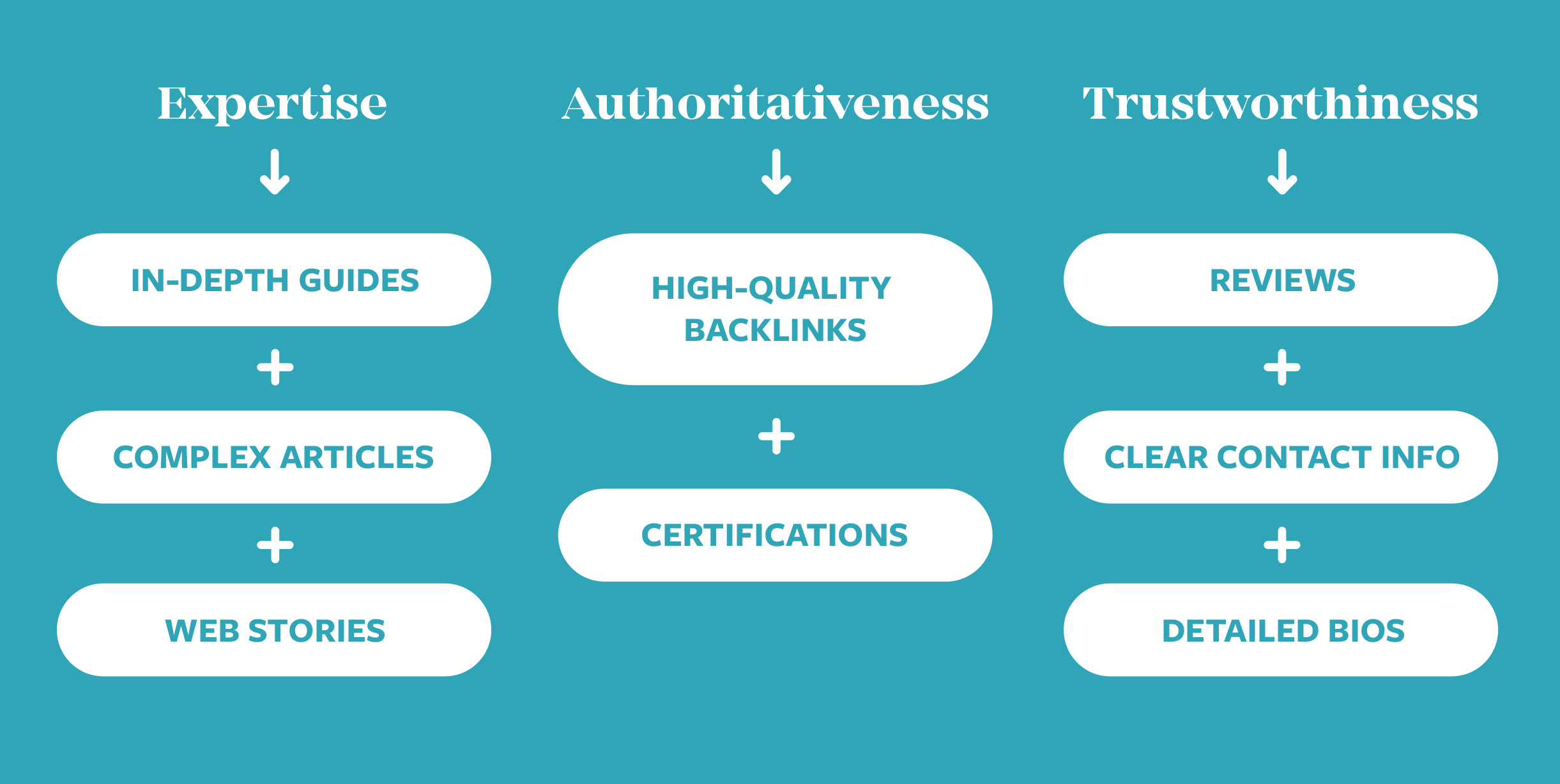
Transparency and Contact Information: AI tools and users look for transparency. Prominently display your firm’s phone number, address, attorney directory, and privacy policy. These details not only help with local SEO but also signal legitimacy to AI-driven systems.
Community Presence and Reviews: Encourage clients to leave reviews on your Google Business Profile, Avvo, and other platforms. If your attorneys have published articles, contributed to industry publications, or spoken at local events, display these logos and links. AI bots can see these trust signals and are more likely to mention your law firm in relevant responses.
Practical Law Firm SEO Tactics for the Age of Generative AI
Real-world legal marketing is about combining traditional SEO with next-generation tactics that work for both search engines and AI chatbots:
Use Real-Time SERP and AI Insights: Track not only your rankings but also what AI chatbots are showing for your top queries. Tools like SEMrush or custom GPTs can monitor where your firm is cited in AI answers, what types of questions appear in “People Also Ask,” and which competitors are getting mentioned.
Optimize for Follow-Up Questions: AI chatbots predict conversational journeys. Add sections to your content that answer follow-up questions a user is likely to ask after reading your primary answer. For example, after “What is the average settlement for a slip and fall injury in New York?” add, “What should I do immediately after a slip and fall?” and “How long does a claim take?”
Leverage Internal Linking and Topic Clusters: Group related content and link between pages using natural anchor text. This helps both search engines and AI understand the relationship and context between different legal topics.
Keep Content Fresh and Accurate: AI tools favor content that is regularly updated and reflects the latest laws. Review your main practice area pages, FAQs, and blog posts quarterly to keep dates, procedures, and statutes up to date.
Experiment with AI Integrations: Consider creating your own AI-powered legal assistant or FAQ bot on your site. Not only can this attract attention from AI-aggregators, but it also enhances user experience and engagement on your own properties.
By combining law firm SEO, law firm marketing, and legal marketing strategies focused on both human and AI audiences, your firm can stand out in AI-powered search, attract better clients, and future-proof its digital presence. Whether you’re ranked in Google, suggested in ChatGPT, or cited in Perplexity’s answers, the goal is the same: be discoverable, be trusted, and be chosen.

CLM is singularly focused on my firm's success and frequently over-delivers. I don’t think that you could make a better choice.
- Paul Greenberg, Briskman Briskman & Greenberg
We have been using CLM for our websites for a number of years and they have been outstanding! Their entire team has always been highly responsive and met all of our marketing needs.
-Todd J. Leonard, Todd J. Leonard Law
